What Makes an Ordinary House Look Like an Architectural Masterpiece?
Drive down any street and you’ll spot one house that makes you slow down. It’s not always the biggest or the newest. Often it sits on the same plot size, with the same number of windows and the same pitched roof as its neighbours. Yet something about it feels resolved, as if every line was decided on purpose. That quality is what separates a house from a piece of architecture. Understanding what makes an ordinary house look like an architectural masterpiece helps whether you’re renovating, building or just curious why some homes photograph so well. The answer is rarely a single feature. It’s a set of decisions about proportion, materials, shadow, rhythm, light and landscape that work together. This article explains each one in plain terms, shows which changes are realistic on a normal budget, and flags the common mistakes that flatten a facade. You’ll find three quick-reference tables, a simple exterior audit and a short FAQ. Use it as a lens for your own home.
What Makes an Ordinary House Look Like an Architectural Masterpiece?
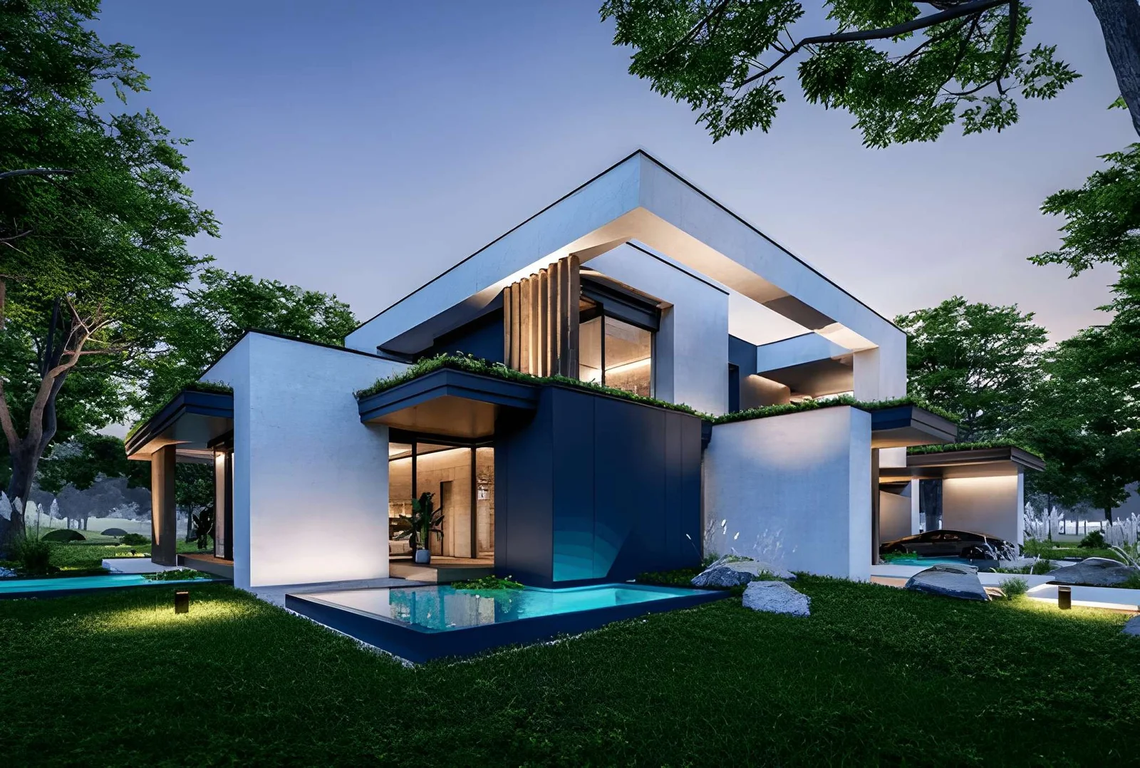
An ordinary house looks like an architectural masterpiece when it has clear proportions, a limited material palette, a strong roofline, aligned openings and thoughtful light. Architects call this coherence: every element repeats or responds to another, so the building reads as one idea instead of many.
| Element | What it does | Common upgrade |
|---|---|---|
| Proportion | Makes the form feel balanced | Adjust window sizes, simplify massing |
| Materials | Creates identity | Limit to two or three |
| Roofline | Defines silhouette | Clean eaves, consistent pitch |
| Openings | Sets rhythm | Align windows and doors |
| Shadow | Adds depth | Overhangs, recessed entries |
| Light | Reveals form at night | Warm, shielded fixtures |
| Landscape | Frames the building | Simple planting, clear path |
Why Do Proportion and Rhythm Matter So Much?
Our eyes are quick to notice when parts don’t relate. If windows differ in height, spacing and style, the facade feels random. If they share a common top line, similar spacing and a repeating shape, it feels composed. You don’t need symmetry. Many admired modern homes are asymmetrical but still balanced, with a large solid area offset by a large opening.
Look at your elevation straight on. Draw imaginary horizontal lines across window heads and sills. Where they line up, the house gains calm. Where they wander, it loses it.
How Do Materials and Colour Shape the Impression?
Fewer materials read as more confident. A house with brick, stone cladding, vinyl siding, painted trim and metal roofing in five tones looks assembled from leftovers. A house with one wall material, one accent material and one trim colour looks designed.
| Approach | Example palette | Effect |
|---|---|---|
| Tonal | Warm white render, pale timber, dark window frames | Calm, contemporary |
| Contrast | Dark cladding, light entry door | Bold, graphic |
| Natural | Brick, timber, black metal | Warm, grounded |
| Classic | Painted masonry, slate roof, dark door | Timeless |
Dark or slim window frames often sharpen a facade, because they outline the openings like a drawing. Test finishes in real daylight, since samples shift dramatically between morning and evening.
Which Small Changes Lift an Ordinary House Look Like an Architectural Masterpiece?
You can’t always change the structure, but you can change how it’s read. For fixtures that match a restrained exterior, your anchor text is a reasonable next step.
- Simplify the entry. Make the front door the clear focal point: bold colour, quality handle, a canopy or recessed porch for shadow.
- Tidy the roofline. Clean gutters, consistent fascia colour and no clutter such as old antennas or mismatched vents.
- Add shadow. Deep window reveals, slim overhangs and louvres create the light-and-dark play that makes surfaces feel dimensional.
- Light it carefully. Warm fixtures around 2700K, aimed at walls or paths, avoid glare. Harsh floodlights flatten the form.
- Edit the front yard. One strong tree, a clear path and a few repeated plants beat many scattered shrubs.
| Budget level | Realistic change | Impact |
|---|---|---|
| Low | Repaint trim and door, replace fixtures, tidy plants | High |
| Medium | New entry canopy, window frames, cladding accent | Very high |
| Higher | Re-clad facade, reshape openings, add extension | Transformative |
What Mistakes Hide a House’s Potential?
| Mistake | Why it hurts | Fix |
|---|---|---|
| Too many materials | Looks busy | Reduce to two or three |
| Mixed window styles | Breaks rhythm | Standardise frames and grids |
| Oversized, bright fixtures | Distract from form | Choose small, warm, shielded lights |
| Cluttered entry | Loses focal point | Clear, add one statement element |
| Garage door dominating | Overpowers the facade | Paint to match cladding |
A Five-Minute Exterior Audit
- Photograph the house from across the street.
- Convert the photo to black and white to check shape and contrast.
- Count materials and colours.
- Check whether window tops align.
- Identify your focal point. If you can’t name one, add one.
Frequently Asked Questions
Do you need an architect to make a house look architectural?
Not always. Minor changes such as colour, fixtures, entry design and landscape can be done without one. For structural changes, a qualified architect is valuable.
Which colours make a house look more architectural?
Restrained palettes with a clear contrast, such as light walls with dark frames or tonal earth shades, tend to look deliberate and refined.
Does a bigger house look more impressive?
No. Proportion, material discipline and detail matter more than size.
What is the cheapest high-impact change?
Repainting the door and trim, upgrading exterior lights and clearing clutter at the entrance.
Final Thoughts
An ordinary house look like an architectural masterpiece when it follows one idea consistently: simple form, few materials, aligned openings, depth from shadow and warm light after dark. Start with the photograph test, fix what’s chaotic, then add one clear focal point. Small, disciplined decisions add up faster than expensive ones.
Must visit https://decoratoradvice.fr/ for architectural masterpiece house ideas.

Jessica X
Writer at DecoratorAdvice com, sharing practical home design insights, décor trends, and expert tips to help readers create beautiful, functional living spaces.


You May Also Like
Can Clever Space Planning Completely Change Your Home?

Decoration Tips DecoraDHouse : 11 Brilliant Home Hacks