Interior Styling for French Homes: A Guide from decoratoradvice com
French homes look effortlessly composed for a reason — but that reason is not natural talent or expensive furniture. It is a discipline of knowing what to leave out. Whether you live in a Haussmann apartment in Lyon, a stone farmhouse in Provence, or a modern flat on the edge of Bordeaux, the same fundamentals apply. Light comes first. Focal points matter more than accessories. And the line between indoors and your garden is less fixed than most people treat it.
This guide covers interior styling in the order that actually matters: light conditions specific to French regions, furniture placement in rooms designed for a different century, and the underrated connection between garden and living room. You will have a workable framework by the end — one you can apply this weekend.
What Interior Styling Means — and What It Does Not
Interior styling is not interior design. Design is structural: floor plans, load-bearing walls, permits. Styling works with what is already there — the layer between architecture and daily life. It covers furniture arrangement, textiles, lighting placement, and the choice of which objects to display and which to put away.
In French homes, this distinction matters because many properties are old. Walls are uneven, Haussmann apartments were not designed as kitchen-living-dining hybrids, and countryside farmhouses rarely have the proportions that modern furniture assumes. Good styling solves these spatial problems without a renovation.
| Factor | Interior Styling | Interior Design |
| Scope | Furniture, textiles, lighting, objects | Floor plans, structure, built-ins |
| Typical budget | Low to mid | Mid to high |
| Time to results | Days to weeks | Months |
| Permits needed | No | Often yes |
| Best used for | Restyling, furnished apartments | Renovations, new builds |
Where to Start: Light Before Everything Else
French light varies sharply by region and building orientation. Apartments in Lille or northern Paris often face east or north — cool, flat light most of the day. Rooms in Provence get warm afternoon light that makes almost any palette look good. Knowing your light condition determines your color choices before you buy a single tin of paint.
A quick test: hold a white piece of paper against your wall at noon. Blue-white light means lean warm (cream, sand, greige). Yellow-white light means you can use cooler tones — soft sage, pale stone, muted lavender — without the room turning cold.
The Living Room: One Focal Point
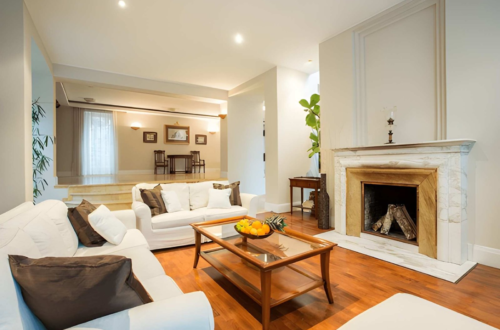
The most common mistake in French living rooms is competing focal points. A statement fireplace, a large television, and a bold rug in the center — nothing wins, and the room feels busy even when it is not full. Pick one. Arrange seating to face it. Let everything else support rather than compete.
| Problem | Root Cause | Fix |
| Room feels small | Furniture pushed against walls | Float sofas 30–40 cm from walls |
| Ceiling feels low | Overhead lighting only | Add floor lamps, remove ceiling fixture |
| Space feels cold | No textile layers | Linen throw, wool rug, linen curtains |
| Looks unfinished | Several small artworks | One large piece beats three small ones |
The Bedroom: Temperature Over Color
French bedroom styling has moved away from all-white toward layered warmth. Linen bedding in natural tones, a wooden bedside table with visible grain, curtains that pool slightly on the floor — these feel considered rather than decorated. In smaller rooms, one oversized element (a wide bed, a tall bookshelf, a large mirror) reads as intentional. Several correctly-scaled pieces just feel cramped. For more on getting the details right, our decoration tips section covers bedroom-specific approaches in more depth.
Connecting Indoors and Out: The Garden Link
One thing that distinguishes French homes with outdoor access is the deliberate visual flow between inside and garden. This is not a trend — it is something older. French houses have long treated the outdoor space as an extension of the living area, not a separate zone with its own unrelated palette.
In practice: the colors inside echo the garden. Grey limestone walls outside suggest warm greige or stone white indoors. Terracotta pots and lavender borders might reappear in kitchen tiles or a bedroom throw. Reading our garden tips alongside your indoor plan helps you build that thread from the front door to the back of the garden, rather than designing two separate spaces that happen to be adjacent.
| Garden Element | Indoor Colour Echo | Works Best In |
| Grey limestone walls | Warm greige, stone white | Living room, hallway |
| Terracotta pots | Burnt orange accent, clay tiles | Kitchen, dining room |
| Lavender borders | Muted mauve, soft sage | Bedroom, bathroom |
| Clipped box hedges | Deep forest green, dark olive | Study, library corner |
Three Mistakes That Are Surprisingly Common
After reviewing homes across multiple French regions for home decor features on this site, a few problems appear repeatedly in otherwise well-maintained properties.
Overhead lighting as the only light source. A single ceiling fixture makes shadows fall downward and gives rooms a flat, institutional quality. Floor lamps, table lamps, and wall sconces at different heights are not decorative — they are what make a room feel like somewhere you want to spend an evening.
Rugs that are too small. A rug should be large enough that the front legs of all major seating rest on it. A small rug floating in the center of a room makes the furniture look like it is waiting for something to happen.
Too many competing wood tones. French homes accumulate furniture across generations, which naturally produces a mix of finishes — and that layered, lived-in quality is actually one of the things that gives French interiors their character. Two or three wood tones work well together. Six do not.
Frequently Asked Questions
What is the French approach to interior styling?
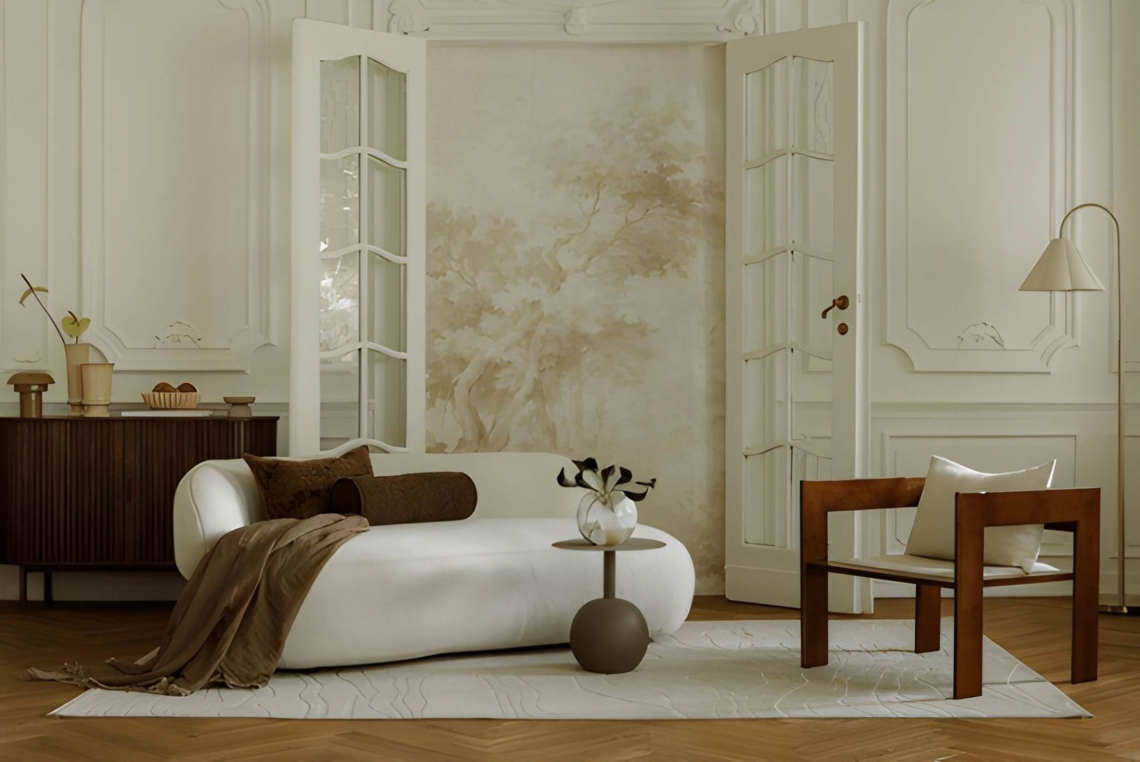
It is built on restraint and layering. Rather than filling every surface, French rooms tend to feature one or two statement pieces, neutral stone or plaster tones on walls, and a deliberate mix of old and new furniture. Comfort is expected to look effortless.
What colors work best in French apartments?
Off-white, warm greige, and soft sage dominate well-styled French interiors. These tones handle limited natural light well — a real constraint in Haussmann-era apartments. Deep navy or terracotta works better as an accent than as a base color.
How do I connect my garden to my living space?
Echo the garden’s palette indoors. Potted olive trees or a large monstera near a window strengthen the visual link without cluttering the room. Terracotta pots and natural linen drapes reinforce it further. The goal is a thread, not a copy.
How many changes should I make when restyling a room?
Three per room: lighting, a textile layer, and one clear focal point. More than three changes at once makes it hard to evaluate what is actually making the difference.
Bottom line
Good styling is mostly subtraction — remove competing focal points, simplify light sources, let one strong element carry each room. Light first, furniture second, textiles third. For professional guidance on specific projects, explore our partners who work with French residential properties.

Jessica X
Writer at DecoratorAdvice com, sharing practical home design insights, décor trends, and expert tips to help readers create beautiful, functional living spaces.


You May Also Like