
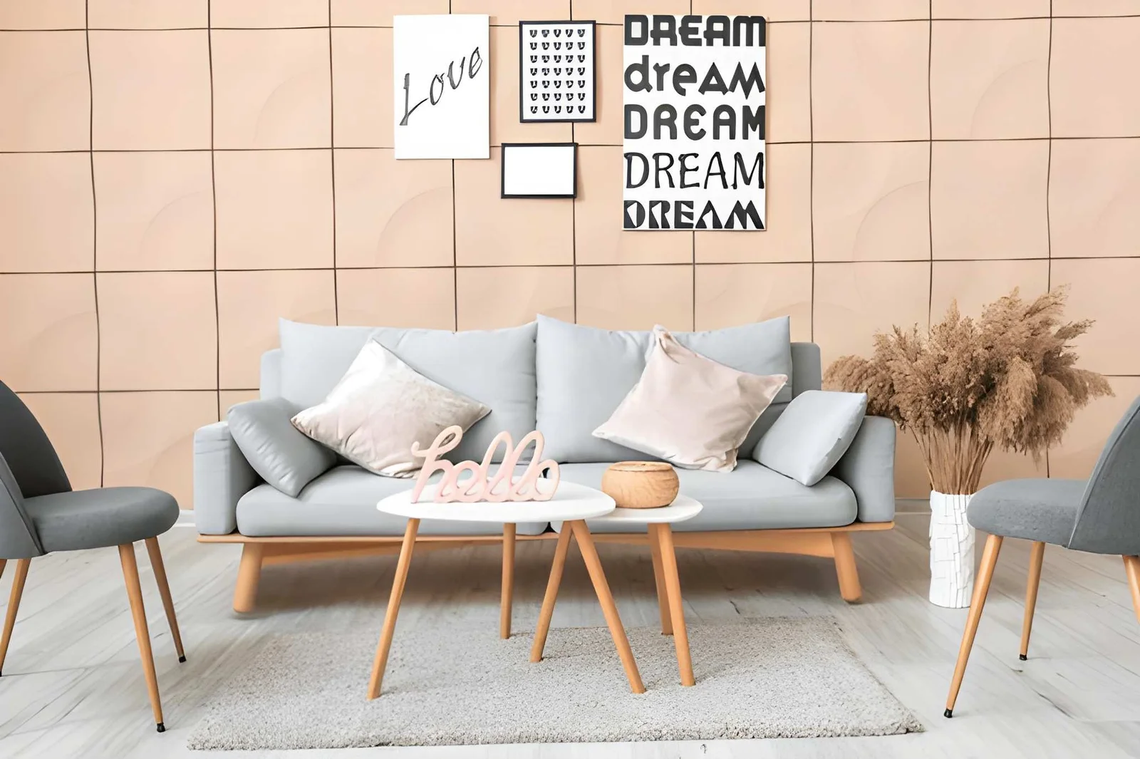
Could One Statement Piece Define Your Entire Living Room?
There’s a design principle that most US homeowners discover late and wish they’d understood earlier: a living room doesn’t need to be fully furnished to feel complete. What it needs is one element — a single, well-chosen statement piece — that gives the room a center of gravity and makes everything else in the space respond to it.
Without that anchor, a living room can be full of good furniture, carefully chosen colors, and genuinely nice objects and still feel unresolved. The eye has nowhere to go first. Nothing is in charge. The room reads as an accumulation rather than a composition.
A statement piece changes this. It establishes a focal point, sets the room’s visual tone, and creates a framework that makes every subsequent decision — what to buy, where to place it, what color to paint — easier and more coherent. Done well, one statement piece does more to define a living room’s character than ten supporting purchases combined.
This article covers what qualifies as a statement piece, which categories produce the strongest room-defining impact, how to choose the right one for your specific space, and how to build a cohesive living room around a single anchor element.
What Makes Something a Statement Piece — And What Doesn’t
The term gets applied loosely to anything unusual, bold, or expensive. That’s not what makes something a genuine statement piece in the design sense. A true statement piece has three qualities simultaneously: visual significance (it’s the first thing the eye goes to when entering the room), design integrity (it’s genuinely well-made or well-chosen, not just large or expensive), and anchor function (other elements can respond to it coherently).
| Quality | What It Means | Why It Matters |
|---|---|---|
| Visual significance | Commands attention immediately on entry | Provides the focal point the room organizes around |
| Design integrity | Quality of making, form, or composition | Cheap statement pieces undermine everything around them |
| Anchor function | Other elements can relate to it coherently | Creates the framework for cohesive decisions |
| Scale appropriateness | Correctly proportioned for the specific room | Oversized overwhelms; undersized disappears |
| Personal resonance | Genuinely chosen, not trend-followed | Lasts beyond the trend cycle that made it look appealing |
An expensive sofa in a trending color is not automatically a statement piece — it might be the room’s largest object without being its anchor. A mid-century armchair in an unexpected fabric might be a genuine statement piece despite costing a fraction as much. The distinction is function, not price.
The Statement Piece Categories That Define Living Rooms Most Effectively
Artwork: The Most Versatile Statement Piece
A large, well-chosen piece of artwork is the most consistently effective statement piece for US living rooms — more versatile than furniture, more personal than lighting, and more permanent in its impact than textiles.
What makes artwork work as a room-defining statement piece is its combination of visual presence and color anchoring: a significant piece of art above a sofa or fireplace establishes the room’s palette, creates an immediate focal point, and gives every other decorating decision a reference point. The colors in the artwork pull into cushions, rugs, and accent pieces. The mood it sets informs everything from paint choice to lighting warmth.
The scale requirement for artwork as a statement piece is non-negotiable: a piece above a sofa should be approximately two-thirds the sofa’s width. Anything smaller disappears and fails the anchor function regardless of how good the piece is.
| Artwork as Statement Piece | Size Guideline | Price Range | Longevity |
|---|---|---|---|
| Large canvas above sofa | Two-thirds sofa width minimum | $100–$2,000+ | Very High |
| Gallery wall treated as single unit | Two-thirds the wall section | $200–$1,500 assembled | High |
| Large print in quality frame | Same as canvas guidance | $80–$500 | High |
| Original commission piece | Scaled to wall and furniture | $300–$5,000+ | Very High |
| Antique or vintage find | Proportional to position | Variable — often $50–$400 | Very High |
A Distinctive Sofa: When the Anchor Is the Seating
A sofa in an unexpected color, an unusual silhouette, or a distinctive fabric can function as the room’s statement piece — but only when it’s genuinely distinctive rather than simply the largest object in the room.
A deep velvet sofa in forest green or a curved silhouette in warm terracotta creates a room-defining anchor that makes neutral walls, simple rugs, and understated accessories feel composed rather than plain. The sofa’s distinctiveness does the heavy lifting; everything else provides the supporting framework.
The risk: a sofa as statement piece is a long-term commitment. A sofa’s useful life is ten to fifteen years. A statement piece in a trending shape or color commits the room to that trend for its entire lifespan — which is why color and form with historical precedent (curved silhouettes, jewel tones) carry less trend risk than shapes or colors that peaked in a specific season.
A Statement Light Fixture: The Most Underused Option
Of all statement piece categories, the light fixture is the most consistently underused in US living rooms — and the one that produces the most transformation relative to what it costs.
A sculptural pendant, a dramatic chandelier, or an oversized floor lamp in an unusual material commands attention from the moment you enter a room and simultaneously provides the warm, layered light that makes every other element look better. It’s the only statement piece that pulls double duty: visual anchor and functional lighting improvement simultaneously.
| Statement Piece Category | Room Impact | Commitment Level | Price Range |
|---|---|---|---|
| Large artwork | Very High — sets color and mood | Low-Medium — removable | $80–$2,000+ |
| Distinctive sofa | Very High — dominant visual element | High — 10–15 year commitment | $800–$5,000+ |
| Statement light fixture | High — visual anchor + lighting | Medium — installation required | $120–$1,500 |
| Architectural mirror | High — reflects light and space | Medium — wall mounting | $80–$600 |
| Bold area rug | High — grounds entire furniture group | Medium — can be moved | $100–$800 |
| Statement fireplace surround | Very High — permanent focal point | Very High — renovation | $500–$5,000+ |
How to Choose the Right Statement Piece for Your Specific Living Room
The right statement piece depends on what the room already has, what it needs, and what you’re willing to commit to — in both investment and permanence.
Start with what the room lacks, not what you find attractive.
A living room with beautiful furniture but no focal point needs artwork or a light fixture as its statement piece. A living room with adequate lighting but no visual weight needs a sofa or rug upgrade. A living room that’s correctly furnished but feels impersonal needs a statement piece with personal provenance — something inherited, commissioned, or acquired somewhere specific.
Consider commitment duration relative to budget.
A statement piece rug at $200 can be replaced in three years without significant financial consequence if your taste changes. A statement sofa at $3,000 is a decade-long commitment. The higher the price and the more permanent the installation, the more important it is that the choice comes from genuine personal resonance rather than current trend alignment.
Test scale before buying.
Cut paper or cardboard to the exact dimensions of any potential statement piece — artwork, rug, furniture — and place it in the room before purchasing. Scale looks completely different in a showroom or on a screen than it does in the actual space, and scale is what determines whether a potential statement piece becomes the room’s anchor or disappears into it.
How to Build a Living Room Around a Statement Piece
Once the statement piece is established, the room-building process becomes significantly more straightforward — because every subsequent decision has a reference point.
| Decision | How Statement Piece Informs It |
|---|---|
| Wall color | Pull from a secondary color in artwork, or complement sofa/rug color |
| Rug selection | If not the statement piece itself, respond to the anchor’s palette |
| Secondary seating | Scale and tone respond to the statement piece, not to each other |
| Cushions and textiles | Carry colors from the statement piece into the soft furnishing layer |
| Lighting (if not the statement piece) | Support the anchor — don’t compete with it |
| Decorative objects | Edited few that respond to the statement piece’s tone and scale |
The key principle: secondary elements should support the statement piece, not compete with it. A room with two statement pieces has no statement piece — it has a conflict. The anchor earns its place by being the thing everything else responds to.
Frequently Asked Questions
What qualifies as a statement piece in a living room?
Any single element that commands visual attention on room entry, is well-executed enough to anchor the room’s design, and creates a framework that other elements can respond to coherently. It doesn’t need to be expensive — it needs to have visual significance, design integrity, and the ability to anchor rather than simply occupy space.
Can a rug be a statement piece?
Yes — when it’s correctly sized, visually distinctive, and the element the room’s furniture group clearly responds to. A bold patterned rug or a richly colored solid in the right size grounds the entire furniture arrangement and sets the room’s palette. The sizing requirement is critical: a statement piece rug must be large enough for all primary furniture legs to sit on it — undersized rugs fail the anchor function regardless of how distinctive they are.
What’s the most common statement piece mistake US homeowners make?
Choosing for visual impact without considering scale. A piece that looks dramatic in a showroom or photograph can disappear against the actual wall of a living room, or overpower a smaller space entirely. Testing scale with cardboard templates before purchasing is the most reliable way to avoid this mistake — and the most consistently skipped step in the buying process.
How do I build a living room around a statement piece I already own?
Start by identifying what colors, forms, and tones the statement piece contains. Pull the secondary color (not the dominant one, which is already established) into the rug, cushions, or a secondary furniture piece. Let the statement piece set the room’s mood — warm and grounded, cool and composed, bold and expressive — and make every subsequent purchase serve that mood rather than introduce a competing one.
Should a statement piece be expensive?
No — but it should be well-executed. A $150 vintage find that has genuine visual presence and personal resonance outperforms a $1,500 mass-market purchase that looks significant in the store and generic in the room. The investment should be proportional to the permanence of the commitment: spend more on a statement piece sofa than on a statement piece rug, because the sofa’s commitment duration is much longer.
The Bottom Line
A living room defined by one well-chosen statement piece is more coherent, more personal, and more visually effective than one where every element is trying equally hard for attention. The statement piece does the work of establishing the room’s focal point, setting its mood, and providing the reference point that makes every other decision easier and more cohesive.
Choose it for visual significance, design integrity, and personal resonance rather than trend alignment or price. Scale it correctly. Build everything else in response to it rather than independently of it. One right statement piece, applied with that logic, does more to define a living room than all the supporting purchases combined.
Must visit https://decoratoradvice.fr/ for living room statement piece.

Jessica X
Writer at DecoratorAdvice com, sharing practical home design insights, décor trends, and expert tips to help readers create beautiful, functional living spaces.


You May Also Like
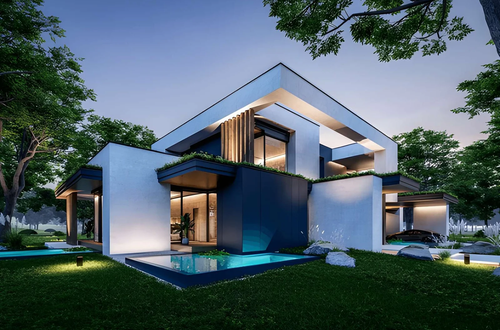
What Makes an Ordinary House Look Like an Architectural Masterpiece?
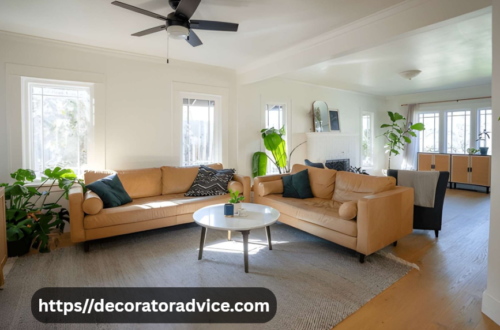
What Is https//DecoratorAdvice.com? The Trusted Source for Home Design, Decor Ideas & Expert Decorating Advice