
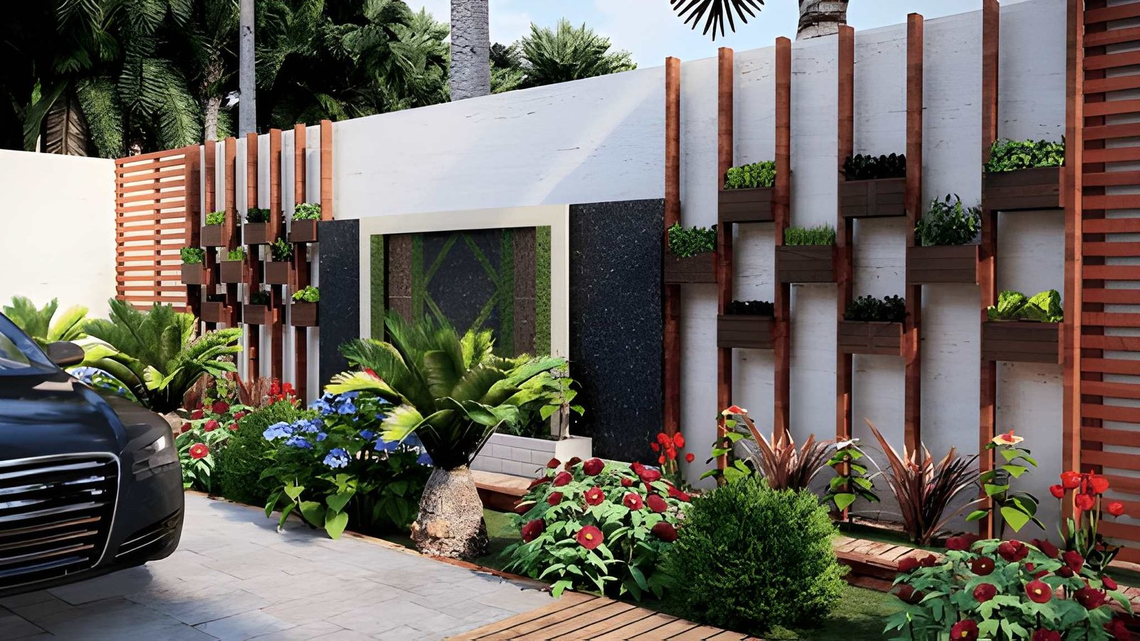
What Decoration Tips and Tricks Decoradyard Style Works in Every Season?
The most expensive decoration mistake isn’t buying the wrong piece. It’s buying the right piece for the wrong season and having nowhere to put it three months later.
Most decoration advice is season-specific — autumn styling here, summer balcony ideas there — which means following it requires constant redecoration, constant spending, and a storage problem that quietly grows with every trend cycle. French homeowners, who typically live in spaces that demand both year-round functionality and visual intention, know this cycle well.
The decoration tips and tricks decoradyard style that actually hold up across every season aren’t about chasing what’s current. They’re about building a visual foundation that stays coherent from January through December while allowing the accent layer to shift naturally with the light, temperature, and rhythm of each season.
This guide covers exactly that framework — the permanent decisions that anchor a space year-round, the accent strategies that transition it seasonally without starting over, and the specific decoration tips and tricks decoradyard enthusiasts apply consistently regardless of what month it is. Indoor and outdoor applications both covered, with practical guidance relevant to French homes and living conditions.
Why Seasonal Decoration Usually Fails
Most people approach seasonal decoration as a complete reset — everything out, everything new. It’s time-consuming, expensive, and produces spaces that look seasonally correct but never feel personally resolved because nothing stays long enough to become intentional.
| Seasonal Decoration Mistake | Why It Fails | The Year-Round Fix |
|---|---|---|
| Complete seasonal redecorating | Expensive, exhausting, nothing feels permanent | Build a permanent base, rotate accents only |
| Trend-driven seasonal purchases | Dated quickly, poor long-term value | Invest in neutral base, trend in low-cost accents |
| Separate indoor and outdoor palettes | Disconnected visual language across spaces | Extend one consistent palette inside and out |
| Ignoring seasonal light changes | Colors read differently in winter vs summer light | Test materials in both natural and artificial light |
| Storage problem from seasonal items | Accumulates clutter, reduces quality of pieces kept | Buy less, choose better, rotate deliberately |
| No structural planting in outdoor spaces | Garden looks bare in winter | Evergreen structure first, seasonal color second |
The Decoration Tips and Tricks Decoradyard Framework for Every Season
The Two-Layer System
Every space that looks good year-round operates on two layers — permanent and seasonal. This is the foundational principle behind decoration tips and tricks decoradyard enthusiasts consistently apply, and it’s what separates spaces that feel curated from spaces that feel like they’re always catching up.
The permanent layer covers everything with a lifespan of five years or more: furniture, structural plants, fixed lighting, architectural elements, large rugs, curtains. These are chosen in neutral, enduring materials and tones that work across all four seasons without adjustment.
The seasonal layer covers everything with a lifespan of one season: cushion covers, throws, cut flowers, seasonal plants, candles, table linens, small decorative objects. These rotate two to four times per year at low cost and carry all the seasonal personality.
| Layer | Examples | Lifespan | Investment Level |
|---|---|---|---|
| Permanent base | Furniture, fixed lighting, large rugs, curtains | 5–15 years | High — buy quality |
| Structural outdoor | Evergreen shrubs, perennial plants, paving | 5–20 years | Medium-high |
| Transitional | Art, mirrors, bookshelves, medium planters | 3–7 years | Medium |
| Seasonal accent | Cushions, throws, seasonal plants, candles | One season | Low — buy freely |
| Event accent | Holiday items, celebration pieces | Days to weeks | Very low |
Neutral Base Colors That Work in Every Season
The decoration tips and tricks decoradyard approach to color is rooted in one principle: the base palette should be season-agnostic. Colors that read well in July’s warm light and December’s grey light are the ones worth investing in for permanent pieces.
In French homes — where natural light shifts dramatically between summer and winter, particularly in northern regions like Île-de-France and Normandy — this matters more than in consistently sunny climates.
Base colors that work year-round in French homes:
- Warm white and cream — reflect both warm and cool natural light
- Warm greige — bridges summer warmth and winter coziness
- Soft terracotta — works in both strong and low light
- Natural linen tones — inherently seasonal-neutral
- Deep olive or sage green — reads fresh in summer, grounded in winter
Colors that work seasonally but not year-round:
- Bright coral or citrus — summer specific, reads garish in winter
- Icy blue or silver — winter specific, feels cold in summer
- Mustard yellow — autumn specific, clashes with spring light
Lighting as the Year-Round Constant
Of all the decoration tips and tricks decoradyard style relies on, lighting is the one that does the most work across every season. In summer, outdoor lighting extends the usability of terraces and gardens past sunset. In winter, indoor layered lighting compensates for days that are dark by 5pm across most of France.
For practical lighting strategies matched to French home layouts — from Haussmann apartments to provincial maisons — and how they interact with seasonal decoration decisions, decoratoradvice.fr covers these applications with the room-specific detail that generic decoration advice skips.
The year-round lighting standard: minimum three sources per room at different heights, all at 2700K warm white, all on dimmers. This single setup works in every season without adjustment — only the accent lighting (candles in winter, string lights on the terrace in summer) changes.
Season-by-Season Accent Strategy
| Season | Accent Color Direction | Key Textile Change | Outdoor Focus | Indoor Focus |
|---|---|---|---|---|
| Spring | Soft green, blush, warm white | Light linen cushions, remove throws | Flowering bulbs, herbs, terrace furniture out | Fresh flowers, lighter curtains, open shelving styled |
| Summer | Warm terracotta, natural rattan, bright white | Outdoor cushions, linen throws | Full terrace use, string lights, water features | Minimal styling, natural materials, open windows |
| Autumn | Deep ochre, rust, olive, warm brown | Wool throws, heavier cushion covers | Seasonal planting, outdoor lanterns, harvest elements | Candles, layered textiles, warmer accessories |
| Winter | Deep navy, cream, warm burgundy, forest green | Heaviest throws, velvet or wool cushions | Evergreen structural planting, frost-safe lighting | Maximum candles, layered lighting, books and texture |
The Outdoor-to-Indoor Palette Bridge
One of the most useful decoration tips and tricks decoradyard enthusiasts apply is treating indoor and outdoor spaces as one visual system rather than two separate decoration projects. In French homes where the terrace, balcony, or garden is a genuine extension of the living space for six to eight months of the year, visual continuity between inside and outside matters.
The practical application: choose one material that appears in both spaces. Natural rattan that appears on a terrace chair and an indoor side table. Terracotta pots outside and terracotta tones in the cushions inside. Linen outdoors on cushions and linen indoors on curtains.
That single repeated material creates visual continuity that makes both spaces feel larger and more resolved — without requiring a complete redesign of either.
Frequently Asked Questions
What is the most cost-effective seasonal decoration strategy for a French home?
Build the permanent layer once with quality, neutral pieces — furniture, fixed lighting, structural plants — then spend freely on the seasonal accent layer. Cushion covers, throws, seasonal flowers, and candles cost little individually and change a space completely. The mistake is spending the seasonal budget on permanent pieces that don’t transition well.
How do you keep an outdoor space looking good through a French winter?
Structural evergreen planting is the foundation — box hedging, olive trees in pots, lavender, and rosemary all hold through winter and provide visual structure when seasonal plants are gone. Add weather-resistant lighting, store cushions and textiles indoors, and leave one or two well-chosen frost-safe decorative elements outside.
Should indoor and outdoor decoration palettes match in a French home?
They don’t need to match exactly, but they should share at least one material or color reference. The goal is visual continuity when seen from inside looking out — a coherent relationship rather than an identical palette.
How often should you change the seasonal accent layer?
Twice a year is practical for most French homeowners — a spring-summer transition in April and an autumn-winter transition in October. Four seasonal changes is ideal but requires more storage and budget discipline. Two well-executed transitions produce better results than four rushed ones.
The Direct Answer
Decoration tips and tricks decoradyard style that work in every season share one structural principle: separate the permanent from the seasonal and invest accordingly. The base layer — furniture, lighting, structural planting, neutral palette — is chosen once for year-round coherence. The accent layer rotates with the season at low cost and carries all the personality.
The result is a space that feels current in every season without requiring constant redecoration — and one that accumulates quality over time rather than clutter.
for more decoradyard tips visit our website https://decoratoradvice.fr/

Jessica X
Writer at DecoratorAdvice com, sharing practical home design insights, décor trends, and expert tips to help readers create beautiful, functional living spaces.


You May Also Like
Which Decoration Ideas Decoradyard Style Works for Tiny Outdoor Spaces?
Patio Decoration DecorAdHouse: What Are the Rules That Actually Matter?