Patio Decoration DecorAdHouse: What Are the Rules That Actually Matter?
A patio has one job: to make you want to be outside. When patio decoration is done right, the space gets used daily. When it’s done wrong — wrong furniture scale, wrong materials for the climate, no shade, no lighting — it becomes the expensive outdoor area you walk past without stopping.
Most patio decoration advice focuses on what to buy rather than how to think about the space. The result is patios filled with furniture that looked good at the store but doesn’t work in the actual environment: cushions that mildew in humid climates, rugs that curl and trip people, string lights with no weatherproofing that fail after one season, seating arranged for a showroom rather than a conversation.
The rules that actually matter in patio decoration aren’t about aesthetic preferences — they’re about how outdoor spaces function, how materials perform under real weather conditions, how scale and proportion work differently outside than inside, and how to create a space that gets used versus one that gets admired from the kitchen window. This guide covers all of it: the decisions that matter most, in the order they matter, with the specifics most decoration advice leaves out.
Why Most Patios Underperform
The gap between a patio that gets used and one that doesn’t comes down to predictable, fixable decisions made early in the decoration process.
| Common Patio Mistake | Why It Fails | Better Approach |
|---|---|---|
| Indoor-scale furniture outside | Looks small, feels wrong proportionally | Scale up — outdoor spaces need larger pieces |
| Non-weatherproof materials | Deteriorates fast, expensive to replace | Match materials to your specific climate |
| No shade element | Unusable during peak daylight hours | Pergola, umbrella, or shade sail first |
| No lighting plan | Space dies after dark | String lights, lanterns, path lighting |
| Rug not rated for outdoor use | Molds, curls, becomes a hazard | True outdoor-rated rugs only |
| No defined zones | Feels like furniture in a parking lot | Use rugs and furniture to create rooms |
| Undersized dining table | Cramped, uncomfortable for actual meals | Size for your real guest count plus two |
Patio Decoration Rules That Actually Matter
1. Size Up — Outdoor Scale Is Different
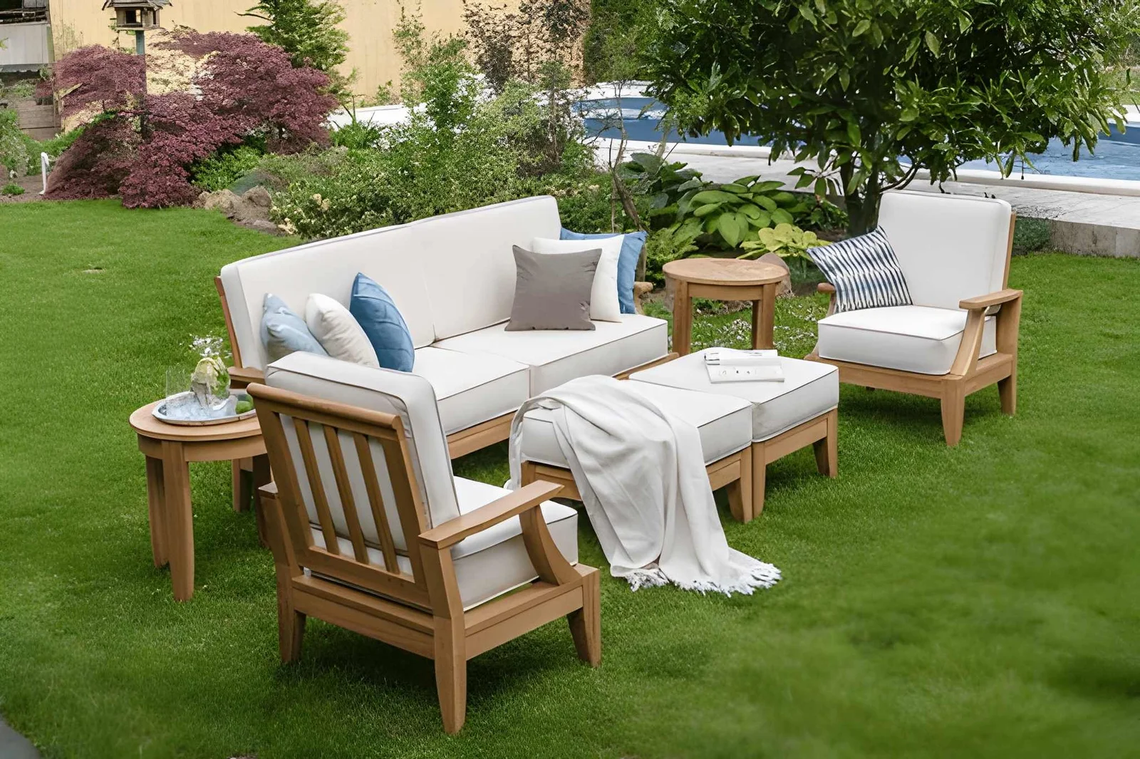
The single most consistent patio decoration mistake is bringing indoor proportions outside. A sofa that fills a living room looks small on a patio. A dining table sized for six feels cramped when you’re eating outdoors with real elbow room needed. The visual references that calibrate scale indoors — walls, ceilings, doorways — don’t exist outside, which means the eye needs larger pieces to register them as appropriately sized.
The practical rule: take your indoor furniture size instinct and go one size larger for outdoor pieces. If you’d choose a six-person dining table inside, choose an eight-person one outside. If you’d choose a two-seat loveseat inside, choose a three-seat sofa outside. The extra size rarely feels excessive outdoors and frequently feels exactly right.
2. Match Materials to Your Actual Climate
Patio decoration fails most often not because of aesthetic choices but because of material choices that ignore local weather conditions. A beautiful teak sectional performs wonderfully in the Pacific Northwest and struggles in a desert climate without regular oiling. Aluminum frames that perform perfectly in dry heat corrode faster in coastal salt air. Cushion fills that dry quickly in low humidity hold moisture and mildew in humid southern climates.
Before purchasing any outdoor furniture or accessories, identify your climate’s primary challenge: humidity, UV intensity, salt air, freeze-thaw cycles, or wind. Then select materials specifically rated for that condition rather than materials that look appropriate or are within budget. The cost difference between climate-appropriate and climate-inappropriate materials is always less than the replacement cost of materials that fail in two seasons.
3. Solve Shade Before Solving Anything Else
A patio without adequate shade is a patio that gets used in the morning and abandoned by noon. Shade is the single most functional element in patio decoration, and it’s consistently treated as an afterthought rather than a foundation.
Permanent shade structures — pergolas, covered awnings, shade sails anchored to the house — outperform portable options in both function and visual weight. They also integrate with the decoration rather than interrupting it. If a permanent structure isn’t possible, a large-diameter cantilever umbrella (minimum nine feet) provides meaningful shade without requiring a center table post that limits furniture arrangement.
Solve shade first. Then arrange furniture under and around the shade. This sequence produces functional patios. The reverse — furniture first, shade wedged in around it — produces compromised versions of both.
4. Create Zones Like You Would Indoors
The patios that feel most livable are the ones organized into distinct zones: a dining area, a seating/conversation area, sometimes a cooking zone or a lounging zone. Without zone definition, a patio feels like furniture arranged in a parking lot — present but purposeless.
Outdoor rugs are the most effective zoning tool available. A rug under the dining table defines the dining zone. A different rug under the seating arrangement defines the living zone. The zones don’t need to be far apart — even in a small patio, the visual separation created by two rugs makes the space feel organized and intentional rather than accumulated.
5. Build a Lighting Plan for After Dark
Patios without lighting die at sunset. The space that could be used for evening meals, weekend gatherings, and quiet after-dinner sitting becomes invisible and unused because nobody thought about what happens when the sun goes down.
The patio decoration lighting approach that works: string lights as the ambient layer (hung overhead in a grid or draped along a pergola), lanterns at table level for warmth and supplemental light, and path or step lighting for safety and visual boundary definition. All three layers together create a nighttime patio that’s as usable as the daytime version.
Weatherproof ratings matter here. IP44 is the minimum for covered patio lighting. IP65 and above for lights exposed to direct rain or installed near water features. String lights marketed as “indoor/outdoor” without a specific IP rating frequently fail in their first season of real weather exposure.
6. Choose Outdoor Textiles That Actually Perform
Cushions, rugs, and throw blankets make a patio feel finished and comfortable — and they’re the elements most likely to fail if the wrong materials are chosen. Sunbrella and similar solution-dyed acrylic fabrics are the benchmark for outdoor cushion performance: UV-resistant, mold-resistant, and cleanable with soap and water. Generic polyester cushions fade in one season of direct sun and mildew in humid climates with minimal provocation.
Outdoor rugs should be specifically rated for exterior use — polypropylene construction, designed to drain and dry rather than hold moisture. A rug marketed as “suitable for covered patios” is not the same as a rug rated for full outdoor exposure. The right outdoor textile choices for your climate determine whether your patio decoration holds up for five years or five months.
Patio Decoration Priority Order
| Step | Decision | Why This Order |
|---|---|---|
| 1 | Shade structure | Determines furniture placement and usability |
| 2 | Zone definition with rugs | Creates spatial organization before furniture |
| 3 | Primary seating | Largest investment, anchor of the space |
| 4 | Dining area | Second major zone, sized for real use |
| 5 | Lighting plan | Extends usable hours into evening |
| 6 | Cushions and textiles | Comfort and color layer over structure |
| 7 | Accessories and plants | Final layer, responds to everything above |
FAQ
What furniture material lasts longest on a patio?
For most US climates, powder-coated aluminum and high-density polyethylene (HDPE) lumber have the strongest track records for longevity with minimal maintenance. Teak performs excellently with regular oiling. Wrought iron is durable but requires rust management in humid or coastal climates.
How do I make a small patio feel larger?
Use one large rug rather than multiple small ones, choose furniture with visible legs and open profiles, keep the color palette light and consistent, and add a mirror rated for outdoor use on a fence or wall. Vertical elements — tall planters, a trellis — draw the eye upward and add perceived space.
What is the best outdoor rug material for a patio?
Polypropylene is the most practical choice for most patios: UV-stable, moisture-resistant, easy to clean, and available across all price ranges. For covered patios in mild climates, natural fiber options like sisal or jute work but require more maintenance and don’t tolerate moisture.
How many string lights do I need for a patio?
For a standard 12×12 patio, two to three strands of 25-foot string lights provide adequate ambient coverage when hung in a grid pattern or zigzag. Aim for light coverage without harsh bright spots — the goal is warm ambient light, not task lighting intensity.
Should patio furniture match indoors?
Style coherence matters more than matching. If your indoor aesthetic is warm and relaxed, your patio should feel like a natural extension of that — not a jarring shift to stark modern or overly rustic. The same color undertones, similar material warmth, and consistent visual weight between indoor and outdoor spaces make a home feel larger and more cohesive overall.
Bottom Line
Patio decoration that actually works follows a clear sequence and a set of non-negotiable rules: scale up from indoor proportions, match materials to your real climate, solve shade before arranging furniture, define zones with rugs, plan lighting for after dark, and choose textiles rated for actual outdoor performance. Follow that sequence and the aesthetic decisions — color, style, accessories — fall into place naturally around a foundation that functions.
The patios that get used every day aren’t necessarily the most expensive or the most elaborately decorated. They’re the ones where someone thought about how the space would actually be lived in and made decisions in that order. That thinking costs nothing and changes everything about how an outdoor space performs.
Must visit https://decoratoradvice.fr/ for patio decoration.

Jessica X
Writer at DecoratorAdvice com, sharing practical home design insights, décor trends, and expert tips to help readers create beautiful, functional living spaces.


You May Also Like
Terrace Decoration Decadgarden: How Do You Make a Narrow Terrace Feel Wider With Decoration?
Which Decoration Ideas Decoradyard Style Works for Tiny Outdoor Spaces?