
Modern Living Room Ideas for French Homes
Most guides on the modern living room read like a furniture catalogue. They say “keep it minimal” and “opt for clean lines” without addressing the real problem: French apartments were not built for modern furniture, and French houses carry decades of accumulated choices that resist a clean reset.
The gap between a modern living room on a mood board and one that works in a real Bordeaux apartment or Normandy farmhouse is almost never about budget. It is about sequencing — knowing which decisions to make first. This guide covers that: how light conditions affect color choices in French properties, why layout matters more than furniture style, what a genuine modern look actually requires, and how outdoor connections can shift the feel of a room without touching a wall.
What a Modern Living Room Actually Requires
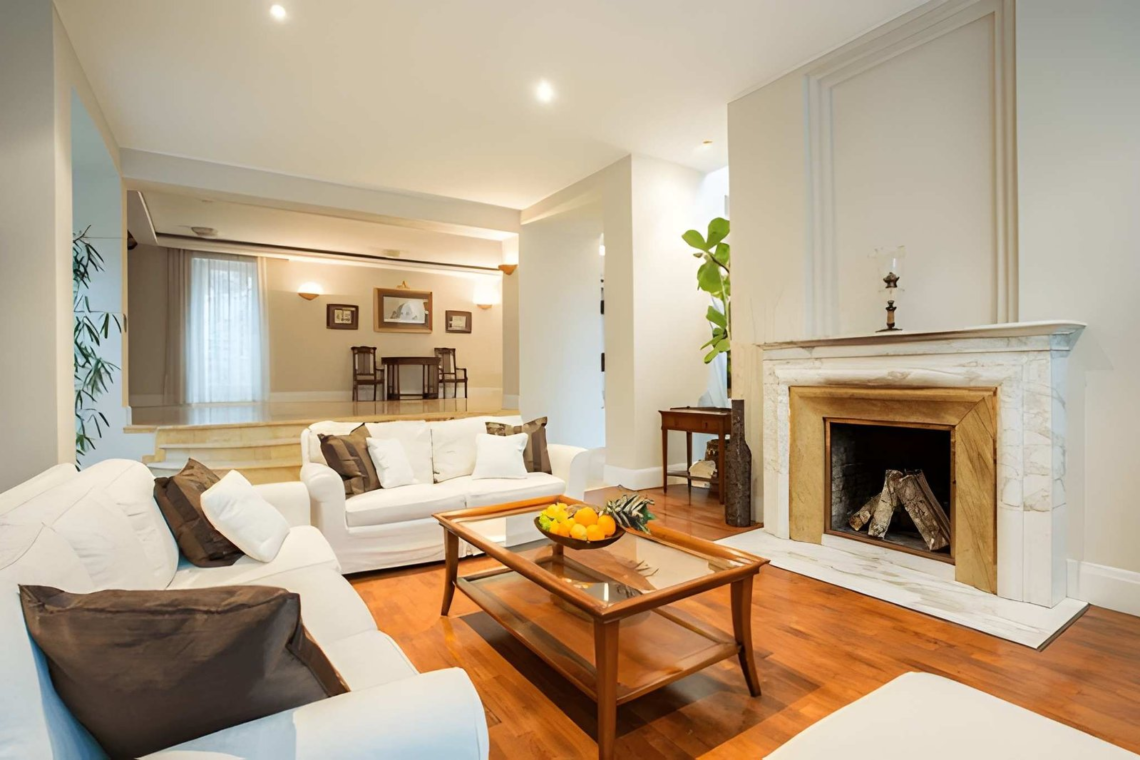
The word “modern” gets applied to almost everything, which makes it nearly meaningless. For practical purposes, a modern living room has four characteristics: a limited color palette (three base tones maximum), lighting at multiple heights, furniture with a clear function, and visible floor space. That last one is underrated. A room where you can see the floor reads as modern almost regardless of when the furniture was made.
What it does not require: expensive furniture, open-plan architecture, or a full replacement of what you own. The most common mistake in French homes is treating a modern refresh as a renovation. It rarely needs to be.
| Element | Modern Approach | What to Avoid |
| Color palette | 2–3 base tones, 1 accent | More than 4 competing colors |
| Lighting | 3 sources at different heights | Single overhead fixture only |
| Furniture quantity | Each piece has a clear role | Filling every corner |
| Floor visibility | At least 40% open floor | Rugs under every seating group |
| Focal point | One per room | TV, fireplace, and art all competing |
Light and Color in French Living Rooms
French natural light is one of the most variable in Europe. A north-facing apartment in Lille gets cool, flat light most of the day. A south-facing room in Montpellier gets warm afternoon sun that makes almost any palette work. Getting the color wrong for your light condition is the single most common reason a room looks off even when the furniture is good.
The test is simple: hold a white sheet of paper against your main wall at noon. If it looks blue-white, your light is cool — lean toward warm base tones (sand, cream, warm greige). If it looks yellow-white, your light is warm and you have more flexibility. Avoid cool grey in north-facing rooms. It reads as damp in French winters, not minimal.
| Light Condition | Typical Location | Recommended Base | Avoid |
| Cool / north-facing | Paris, Lille, Strasbourg flats | Warm greige, sand, soft cream | Cool grey, ice blue |
| Neutral / east-facing | Most French apartments | Warm white, pale sage, stone | Very dark base colors |
| Warm / south-facing | Provence, Languedoc, Côte d’Azur | Soft terracotta, muted lavender, chalk | Overly warm yellows |
| Diffuse / overcast regions | Bretagne, Normandie | Warm off-white, natural linen tones | White with blue undertones |
Furniture Layout: The Decision Most People Skip
In a modern living room, how furniture is arranged matters more than what the furniture looks like. Two sofas and a coffee table arranged well will outperform a room full of expensive pieces placed without intention.
The most useful rule for French apartments specifically: float everything. Pull sofas and chairs 30–40 cm away from walls. This counterintuitive move makes rooms feel larger, not smaller, because it creates negative space — one of the clearest visual signals of a modern layout. Walls lined with furniture signal storage, not living.
The Single Focal Point Rule
French living rooms often have a fireplace, a television, and sometimes a feature wall or artwork all present in the same room. Each pulls the eye. None wins. Decide which one is the focal point, arrange seating to face it, and treat the others as supporting elements. If the television cannot be subordinated visually, consider a recessed cabinet or a wall-mounted unit that closes when not in use. Several of our decoration tips cover exactly this — how to manage the TV problem without sacrificing the rest of the room.
Storage and the Modern Living Room in France
French apartments, particularly in older buildings, were not designed with storage in mind. The living room absorbs everything that has nowhere else to go. Built-in shelving along one wall is the most efficient solution — it reads as architectural, not furniture, and keeps surfaces clear even when fully used. Ottomans with internal storage work well in smaller rooms where a coffee table would dominate.
If the room is doing triple duty as hallway, dining, and living space, that is a layout problem more than a styling one. Our renovation tips section covers multi-function solutions specific to French apartment constraints.
Bringing the Outdoors Into a Modern Living Room
French homes with garden or terrace access have an advantage most people underuse. A visual link to the outdoors makes a living room feel larger. The key is continuity — the indoor palette should echo something outside rather than ignore it entirely.
Grey gravel and clipped hedges outside suggest stone-grey cushions or an olive throw inside. Terracotta pots on a terrace can reappear as a single accent tone in the room. Our garden tips section covers low-maintenance planting choices that work visually with modern interiors. For those without outdoor access, one large plant near a window — an olive tree, a fig, a monstera — achieves a similar effect.
| Change | Approximate Cost | Visible Impact | Time to Complete |
| Replace ceiling light with 2–3 lamps | €150–€400 | High | 1 afternoon |
| Float furniture from walls | €0 | High | 1 hour |
| Add one large rug (correct size) | €200–€600 | Medium–High | Same day |
| Remove one piece of furniture | €0 | Medium | 30 minutes |
| Add a large mirror opposite main window | €100–€350 | High | 1 hour |
| Replace curtains with floor-length linen | €120–€300 | Medium | Half day |
Frequently Asked Questions
What makes a living room look modern?
Clean lines, a limited color palette, lighting at multiple heights, and visible floor space. Clutter and competing focal points undermine a modern look faster than outdated furniture does.
What colors work best in a modern living room in France?
Warm off-white, soft greige, and muted sage are reliable for French properties. They handle variable natural light well and pair easily with wood and stone. Avoid cool grey in north-facing rooms — it reads cold rather than minimal.
How do I make a small French apartment living room feel larger?
Float furniture 30–40 cm from walls, use one correctly-sized rug rather than several small ones, and replace the ceiling fixture with floor and table lamps. A large mirror opposite the main window adds perceived depth without any structural change.
How much should I budget for a modern living room refresh in France?
A meaningful refresh — lighting, textiles, one key furniture piece — typically runs €800 to €2,500. Full furniture replacement is €4,000 to €12,000 for a mid-range result. Lighting upgrades alone deliver the highest return per euro.
Bottom line
A modern living room in France is mostly a sequencing problem. Sort the light condition first, settle on a color palette, arrange furniture with floor space in mind, solve storage before buying anything decorative, and add the outdoor connection last. Do those five things and the room largely styles itself. For product and supplier recommendations, our home decor directory covers vetted French and European suppliers worth considering. For professional help with larger projects, see our partners page.

Jessica X
Writer at DecoratorAdvice com, sharing practical home design insights, décor trends, and expert tips to help readers create beautiful, functional living spaces.

You May Also Like
What Is https//DecoratorAdvice.com? The Trusted Source for Home Design, Decor Ideas & Expert Decorating Advice
Latest decoratoradvice .com : Why 2026’s Smart Homes Are Getting Simpler, Not Smarter