
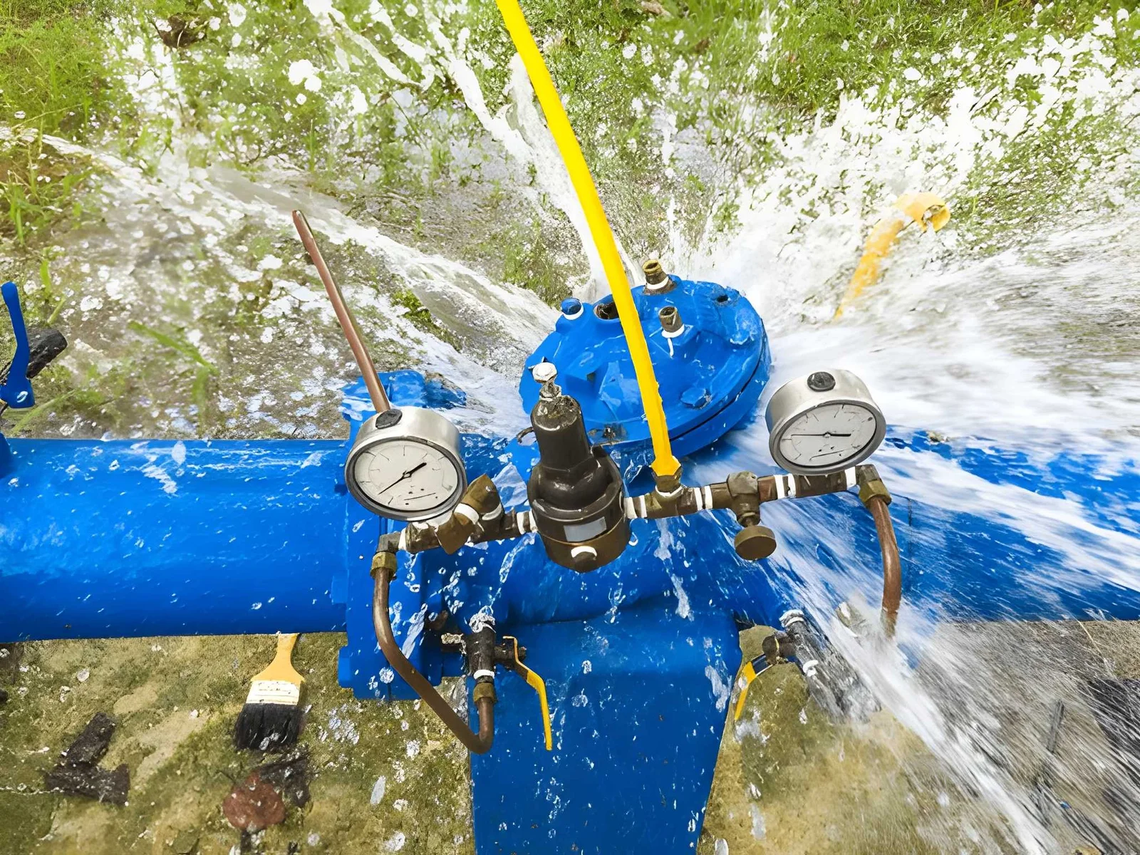
What Causes Water Pressure to Change Throughout a Residential Property?
Your shower is strong on the first floor and weak upstairs. The kitchen tap runs fine until the dishwasher starts. The hose bib roars in the morning and trickles at dinner. None of this feels random, yet most homeowners treat each problem separately and end up replacing a showerhead that was never the cause. Water pressure is not one number. It changes as water travels from the street to each fixture. So what causes water pressure to change throughout a residential property?
The answer lies in the path water follows, and the clues in the pattern. This article walks the path from the street to the faucet, explains what changes pressure at each stage, and shows how to match your symptom to a likely cause. You will find a quick answer, a path table, a pattern table, a simple gauge test, a safety note, and the mistakes that cost homeowners money. It suits city-supplied and well-supplied homes across the US. Read the quick answer first, then use the sections that fit your home.
What Causes Water Pressure to Change in a Home?
Water pressure changes because of supply conditions, height, demand, hidden restrictions, and equipment. Pressure at your property depends on its elevation relative to the reservoir serving your area, and it changes by 0.433 psi per foot of elevation change. Inside the house, a failing regulator, corroded pipes, a clogged fixture, or a weak well system can also shift it.
The Path From Street to Faucet
| Stage | What can change pressure | Typical sign |
|---|---|---|
| Street main | City pressure can range from about 30 psi to over 100 psi at the meter | Whole house high or low |
| Meter and main shutoff | A partly closed valve | Whole house low |
| Pressure-reducing valve | Failure is a common cause of sudden pressure changes | Sudden drop or spike |
| Interior pipes | Galvanized steel pipe, common before 1970, can corrode and roughen over time | Gradual decline over years |
| Fixture | Clogged aerator or valve | One tap only |
| Well system | The pressure switch’s turn-on setting, such as 30 psi on a 30/50 switch, sets the minimum system pressure | Cycling or drops when demand rises |
Normal and Problem Ranges
| Reading | Meaning |
|---|---|
| Below 40 psi | Low, and many fixtures and appliances are rated for at least this |
| 40 to 80 psi | Accepted residential range under the International Plumbing Code |
| Above 80 psi | Most codes require a pressure-reducing valve |
Match the Pattern to the Cause
| What you notice | Likely cause | First check |
|---|---|---|
| Weak everywhere | Main valve, PRV, street supply, corroded pipes | Gauge on a hose bib |
| Weak upstairs only | Height. In a two-story home with 10-foot ceilings, the second floor gets about 4.3 psi less | Compare with downstairs |
| One fixture weak | Clogged aerator or supply line | Clean or replace |
| Drops when two things run | Undersized or restricted pipes, or well tank issue | Test with fixtures running |
| Pressure spikes or varies | Failing PRV, supply changes | Watch the gauge over a day |
| Hot water only | Water heater or hot-side valve | Check the heater |
| Bad at dinner, fine overnight | Neighborhood demand | Test at different times |
A Simple Gauge Test
- Buy a hose-bib pressure gauge.
- Turn off all water use in the house.
- Attach the gauge and read it. That’s your static pressure.
- Run a tub or several taps and read again. A big drop suggests restriction.
- Repeat at different times for a day or two.
A gauge at the hose bib tells you whether the problem is upstream of your meter or inside your home. If supply pressure is low, contact your water utility.
Safety Note
High pressure damages fixtures and can cause hose or pipe failures. Don’t adjust a regulator without a gauge, and hire a licensed plumber for pressure valves, pipe replacement, and booster pumps. On a well, turn off power before touching the pressure switch or tank, and call a qualified well technician.
Mistakes to Avoid
The most common mistake is replacing fixtures without testing pressure. Another is cranking up a regulator to fix a weak fixture. Ignoring a spike is a third error, since it can hide a failing regulator. Overlooking height is common. Finally, don’t assume city pressure never changes.
FAQ
What is ideal water pressure for a home?
Many plumbers aim for around 50 to 60 psi, within the 40 to 80 psi range.
Why does my pressure drop at certain times?
Neighborhood demand and supply conditions can change it.
Bottom Line: Follow the Pressure Path
Water pressure changes throughout a residential property because supply, height, equipment, pipes, and demand all play a part. Test with a gauge, match the pattern to the stage, and call a plumber for regulators and pumps. A reading beats a guess.
Must visit https://decoratoradvice.fr/ for changing water pressure ideas.

Jessica X
Writer at DecoratorAdvice com, sharing practical home design insights, décor trends, and expert tips to help readers create beautiful, functional living spaces.


You May Also Like
What Should You Know About Radon Testing Before Purchasing a Property?
Why Do Electrical Breakers Trip Even When Appliances Appear to Work Normally?
