
Decoration Tips DecoraDHouse : 11 Brilliant Home Hacks
Most decoration advice tells you to buy more. New throw pillows. Another accent chair. One more plant. The DecoraDHouse approach from decoratoradvice com says the opposite: before you spend anything, remove something.
That single shift changes how every room feels. And it’s the reason these decoration tips DecoraDHouse consistently outperform the usual listicle advice you’ll find recycled across the web. The philosophy is rooted in subtraction before addition — clear the visual noise first, then layer in pieces that actually earn their space.
This guide covers 11 proven hacks built on that framework. From lighting decisions most US homeowners overlook, to a two-table rule that makes any living room look professionally styled, each tip is practical and doable without a contractor. Whether you’re working with a 900-square-foot apartment in Chicago or a suburban home in Texas, these strategies adapt. By the end, you’ll have a clear action plan — not just inspiration you’ll forget by tomorrow.
Why Most Decoration Advice Fails American Homeowners
Here’s something decoration content never admits: the average US homeowner who follows generic “refresh your space” tips ends up with a cluttered room that cost more money. According to a 2023 Houzz survey, 58% of US homeowners reported overspending on decor items they later removed within 18 months.
The decoration tips DecoraDHouse framework was built specifically to fix that. It operates on three non-negotiable rules:
| Rule | What It Means | Why It Matters |
| Subtract first | Remove before buying anything new | Prevents layering clutter on clutter |
| Invest high, save low | Spend on foundational pieces; budget on accents | Maximizes visual impact per dollar |
| One finish at a time | Complete each upgrade before starting the next | Reduces decision fatigue and project abandonment |
Most decoration guides skip rule one entirely. That’s why rooms styled by following them still feel off.
11 Decoration Tips DecoraDHouse
Hack 1: Do the 15-Minute Removal Test First
Walk into your room, set a 15-minute timer, and pull out anything that doesn’t have a specific purpose or strong emotional reason to stay. Put it in boxes in another room. Live with the cleared space for 48 hours before deciding what comes back.
Nearly every professional decorator does a version of this. The results surprise people — rooms feel larger and more intentional without a single dollar spent.
Hack 2: Layer Three Light Sources, Not One
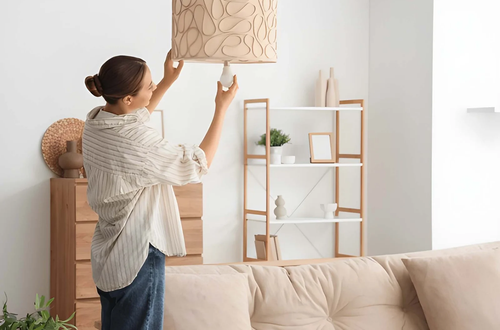
Single overhead lighting is the most common decorating mistake in US homes. It flattens every surface and makes rooms feel like waiting rooms.
Replace it with three layers: ambient (overhead or floor lamp), task (reading or desk light), and accent (a small lamp highlighting artwork or a shelf). The cost is low. The difference is not subtle.
Hack 3: Use the 60-30-10 Color Rule — Properly
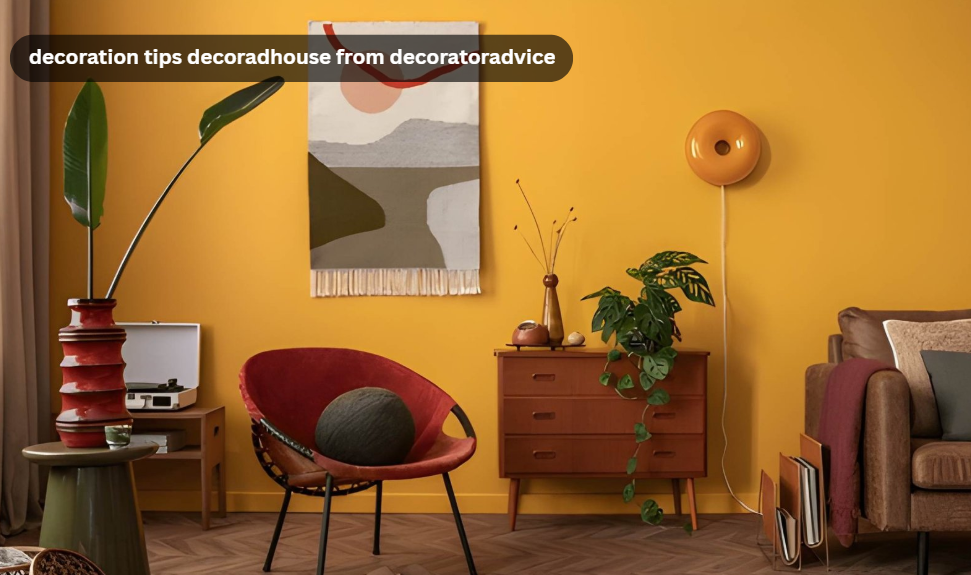
Most people have heard of this rule. Almost no one applies it correctly.
- 60% of the room: your dominant color (walls, large rug, sofa)
- 30%: a secondary color (curtains, accent chair, bedding)
- 10%: an accent (throw pillows, vase, artwork)
The mistake is treating throw pillows as the 60%. They’re the 10%. Swap the proportions and the room feels like a design decision rather than a shopping cart.
Hack 4: Hang Curtains Higher Than the Window Frame
This is the single highest-ROI decoration tip that costs almost nothing. Hang curtain rods 4 to 6 inches above the window frame, not on it. The visual effect adds roughly 20% perceived ceiling height. In low-ceiling US homes — most built before 1990 — this is genuinely transformative.
Hack 5: Replace Small Rugs With One Large One
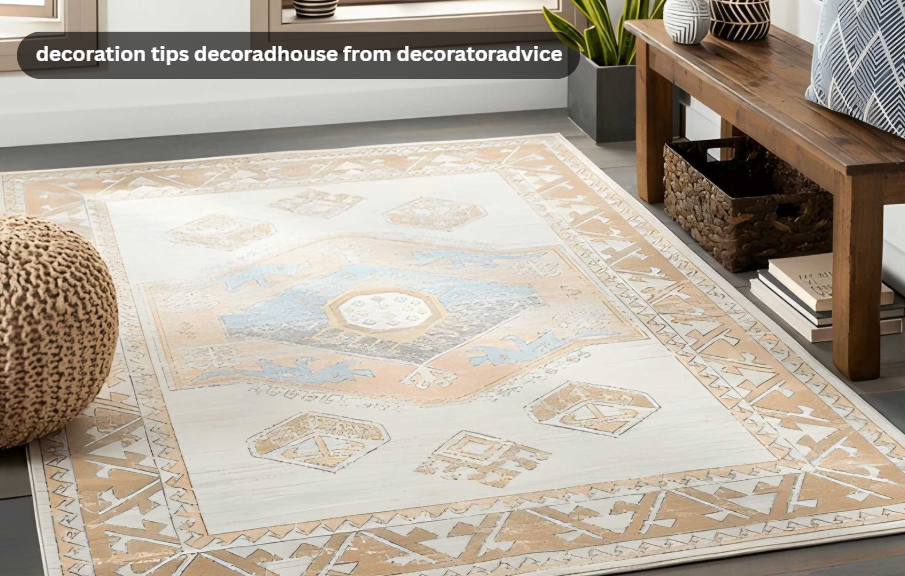
A rug that only fits under the coffee table makes a room feel smaller. The front legs of every major seating piece should sit on the rug. In a standard US living room, that typically means a minimum 8×10 rug, not the 5×7 most people default to.
Large rugs anchor furniture arrangements. Small rugs make them float.
Hack 6: Use Odd Numbers for Object Groupings
Decorators group objects in threes and fives because odd-numbered groupings feel curated rather than accidental. Two candles on a shelf look like a matched set from a drugstore. Three candles at different heights look intentional.
This applies to artwork arrangements, plant clusters, and tabletop objects equally.
Room-Specific decoration tips Recommends
| Room | Top Hack | Avoid |
| Living Room | One large statement piece instead of several small accents | Matching furniture sets (they look staged, not lived-in) |
| Bedroom | Floating nightstands + wall sconces to clear floor space | Overhead ceiling fan as the only light source |
| Kitchen | Open one cabinet and style it visibly | Cluttered countertops with every appliance out |
| Bathroom | Oversized mirror to double perceived light | Multiple small mirrors that fragment the space |
| Home Office | Task lighting at eye level | Facing a blank wall with no visual anchor |
Hack 7: Stop Matching, Start Coordinating
Matching furniture sets — sofa, loveseat, and armchair in identical fabric — is the decorating equivalent of wearing a full suit bought as one piece. It reads as effort without taste.
Coordinating means choosing pieces that share a common element (leg finish, fabric weight, color family) without being identical. Pull one warm-toned wood finish throughout the room on different pieces, and the space reads as thoughtfully assembled rather than catalog-copied.
Hack 8: Create a Single Focal Point Per Room
Every well-decorated room has one thing your eye goes to first. Not three. Not a gallery wall and a statement sofa and an oversized plant.
Pick the focal point before buying anything else. Build around it. This is the core structural principle behind the decoration tips DecoraDHouse — and it’s the one competitors consistently skip.
Hack 9: Add Texture Before You Add Color
When a room feels flat, most people reach for a new color. The real fix is usually texture. A linen throw, a jute rug, a wood bowl, a woven wall piece — these add visual complexity without the commitment of repainting.
Texture catches light differently throughout the day. Color stays static. In rooms with limited natural light (common in Midwest and Northeast US homes), texture does more work than color ever will.
Hack 10: Scale Your Artwork Up
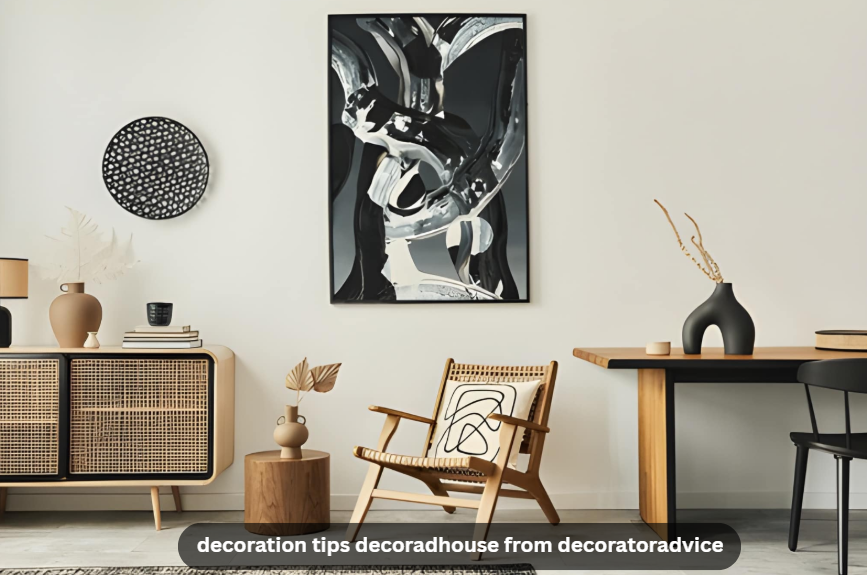
The most common artwork mistake: pieces that are too small for the wall. A single 8×10 framed print on a large wall looks like it wandered in from a hotel hallway.
For a standard sofa wall, artwork should span roughly two-thirds the sofa’s width. For a dining room, the art or mirror above the buffet should be wider than the buffet itself. Scale is what separates rooms that feel finished from rooms that feel in-progress.
Hack 11: Finish One Room Completely Before Starting Another
This isn’t about patience — it’s about perception. Half-finished rooms create ambient stress that’s hard to name but easy to feel. You walk past an incomplete project twelve times a day, and each time it registers as unfinished business.
The decoration tips decoradhouse recommends a strict one-room-at-a-time rule. Complete the living room to 100% before touching the bedroom. The compounded effect of completed spaces — each one done right — builds momentum that scattered multi-room projects never achieve.
How to Prioritize These Hacks (Start Here)
Not every home needs all 11. Use this sequence:
- Do the removal test (Hack 1) — free, immediate impact
- Fix the lighting (Hack 2) — under $150 for most rooms
- Hang curtains correctly (Hack 4) — under $30 in hardware
- Upgrade rug size (Hack 5) — highest single purchase impact
- Apply 60-30-10 to what you already own (Hack 3) — free
The first three cost almost nothing. Most US homeowners see a noticeable difference before spending $200.
Frequently Asked Questions
What makes decoration tips DecoraDHouse different from standard advice?
The framework starts with removal, not addition. Most decoration guides assume you need to buy something new. https//decoratoradvice.com method treats your existing furniture and layout as the starting point, then identifies what’s creating visual noise before recommending any purchases. It’s a more disciplined approach that consistently costs less and produces more coherent results.
How do I apply these decoration tips in a small US apartment?
Small spaces benefit most from Hacks 1, 4, and 5 — clearing clutter, raising curtain rods for perceived height, and using a properly sized rug to anchor the layout. In apartments under 700 square feet, the focal point rule (Hack 8) is especially important since there’s no room for competing visual anchors.
Which room should I decorate first?
Start with the room you spend the most time in. For most US homeowners, that’s the living room or bedroom. Completing one space well — using the one-room rule from Hack 11 — creates momentum and gives you a reference point for the rest of the home.
Do I need to repaint to see a real difference?
No. Hacks 2, 3, 4, 5, 6, 9, and 10 require no painting. Texture, lighting, curtain placement, rug sizing, and artwork scale can transform a room while leaving the walls exactly as they are. Paint is a tool, not a prerequisite.
Final Thought
The 11 decoration tips outlined here share one underlying logic: good decorating is mostly editing. The rooms that photograph well, that guests compliment, that feel genuinely calm — they got there by removing the right things and keeping the rest deliberate.
You don’t need a renovation budget. You need a 15-minute timer and a willingness to pull things off shelves.

Jessica X
Writer at DecoratorAdvice com, sharing practical home design insights, décor trends, and expert tips to help readers create beautiful, functional living spaces.


One Comment
Pingback: