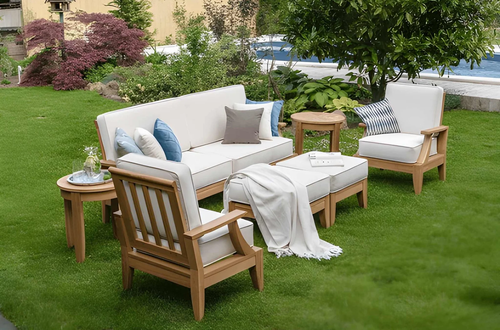
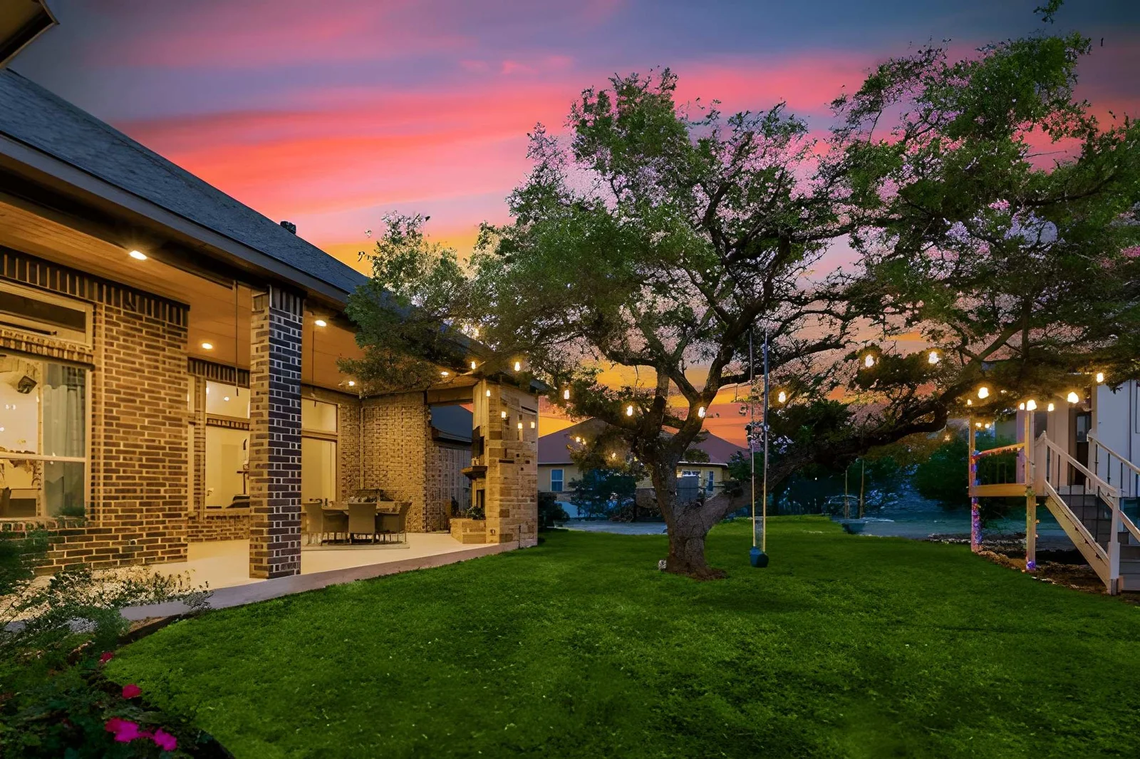
Yard Decoration Decadgarden: Which Single Change Has the Most Impact on How a Yard Feels?
Most yard improvement advice suffers from the same problem as most home improvement advice: it gives you a list of twenty things you could do without helping you identify the one thing that would actually make the biggest difference in your specific situation. You end up paralyzed between options, spreading a limited budget across several small improvements that each move the needle slightly, and finishing the season with a yard that’s better in several small ways but hasn’t fundamentally changed in how it feels.
The question yard decoration decadgarden consistently centers on is more focused than most outdoor content attempts: not what could you do, but what single change would produce the most transformation in how your yard reads and feels. That question has an answer — and it’s not the same for every yard, but there’s a consistent pattern in which changes produce disproportionate results and which ones produce marginal ones.
This article covers exactly that. We’ll examine which single changes consistently deliver the most impact across different yard types and conditions, why some high-effort improvements produce less result than low-effort ones, and how to identify which single change your specific yard needs most — before spending anything.
Why Most Yard Improvements Underdeliver
Before identifying the highest-impact change, it’s worth understanding why most yard improvements fall short of expectations. The failure pattern is consistent across US homeowners regardless of budget or effort level.
| Why Yard Improvements Underdeliver | What It Produces |
|---|---|
| Decoration without structure | Random objects in undefined space |
| Plants added before edges are clean | New planting in a messy framework |
| Focus on back yard while front stays neglected | Improvement invisible from street |
| Furniture without shade or definition | Unused seating area by midsummer |
| Seasonal planting without perennial structure | Yard looks good for 6 weeks, bare the rest |
| Multiple small changes vs. one significant one | Everything slightly better, nothing transformed |
Yard decoration decadgarden identifies the root cause in almost every case as the same thing: decoration applied before structure is established. The single change that matters most is almost always structural — it changes the framework within which everything else operates, which means everything else immediately looks better without changing.
The Single Change With the Most Consistent Impact: Clean Edges
Before any plant, any furniture, any lighting, any decoration — clean lawn and bed edges transform how a yard reads more reliably than any other single intervention.
The reason is visual psychology. Clean edges communicate maintenance and intention. They tell the eye that what it’s looking at was considered rather than allowed to accumulate. A yard with clean edges and minimal planting reads as better maintained than a yard with overgrown, ragged edges and abundant planting. The edge sets the quality standard for everything inside it.
The cost: a half-moon edger runs $25 to $40. A bag of fresh mulch applied after edging costs $8 to $15. The time investment is one afternoon. The visual result looks like professional landscaping.
Yard decoration decadgarden treats this as the non-negotiable first step before any other yard improvement — because every other change is undermined by ragged edges and every other change is elevated by clean ones.
| Yard Condition Before Edging | Yard Condition After Edging | Time Required | Cost |
|---|---|---|---|
| Grass bleeding into garden beds | Clean separation, defined beds | 2–4 hours | $25–$40 tool |
| Mulch mixed with lawn | Fresh mulch layer, clean border | 3–5 hours with mulch | $40–$80 total |
| Pathway lost in lawn growth | Clear defined path | 1–2 hours | Tool only |
| Driveway edge overgrown | Clean hard edge | 1 hour | Tool only |
| Tree ring undefined | Defined circle, mulched | 30 min per tree | $8–$15 mulch |
When the Highest-Impact Change Isn’t Edging
Edging is the most universally applicable single change. But yard decoration decadgarden also identifies situations where a different single intervention produces more impact for a specific yard’s conditions.
When the Yard Has No Shade: One Tree or Structure Changes Everything
A yard without shade in a US summer becomes unusable between 10am and 4pm for six months of the year. No amount of furniture, planting, or decoration compensates for the absence of a place to be outside without direct sun exposure. In this situation, the single highest-impact change is adding shade — a strategically placed tree, a pergola, a shade sail, or a large market umbrella over the primary seating area.
This one change extends the yard’s daily usability by four to six hours and makes every other investment in the space worthwhile by creating conditions where people actually want to be outside.
When the Yard Has No Defined Seating Area: One Outdoor Rug Changes Everything
An outdoor rug placed under a seating group in a yard with no defined zones does something immediate and significant: it turns furniture sitting in open space into a room. The rug communicates that this area has a purpose — that it’s somewhere to be rather than somewhere to pass through. Without it, even well-chosen furniture reads as randomly placed. With it, the same furniture reads as a designed space.
When the Yard Is Viewed Primarily From Inside the Home: One Focal Point Changes Everything
Many US yards are experienced more through windows than in person — particularly during cold months. In this situation, the highest-impact single change isn’t something that improves usability. It’s something that improves the view from the home’s interior windows. A well-placed specimen plant, a simple water feature, a sculptural element in the yard’s center — anything that gives the eye something to land on when looking out creates an experience that improves daily life for ten to twelve months a year, not just during outdoor season.
| Yard Situation | Highest-Impact Single Change | Approximate Cost | Daily Impact |
|---|---|---|---|
| Ragged edges and beds | Edge all lawn and bed borders | $25–$40 | Very High — immediate visual upgrade |
| No shade in seating area | Large market umbrella or shade sail | $80–$250 | Very High — extends usability by hours |
| No zone definition | Outdoor rug under seating group | $50–$200 | High — creates room from open space |
| Viewed mainly from inside | Specimen plant or focal element | $40–$200 | High — improves daily view year-round |
| Bare fence line | Climbing plant on trellis | $30–$100 | High — adds softness and privacy |
| No evening usability | String lights overhead | $25–$80 | High — extends day by 2–4 hours |
| Lawn patchy and worn | Overseed or groundcover | $20–$60 | Medium-High — improves base condition |
How Yard Decoration Decadgarden Approaches the Single-Change Decision
The framework yard decoration decadgarden uses to identify which single change applies to a specific yard is behavioral before it’s aesthetic. The key questions:
How is the yard currently used — and how is it not used? A yard that’s never sat in needs a usability fix before a decoration fix. A yard that’s used but feels disorganized needs structure before decoration.
What’s the yard’s primary problem? Is it that it looks neglected? That it’s uncomfortable to be in? That it has no visual interest when viewed from inside? That it has no privacy? Each problem has a different highest-impact single solution.
What’s the constraint — time, budget, or skill? Edging is low budget and low skill. A pergola requires more of both. The right single change for your situation works within the constraint you’re actually operating under.
Frequently Asked Questions
What is yard decoration decadgarden and what does it offer?
Yard decoration decadgarden is a focused outdoor space resource covering practical, high-impact improvements for yards, gardens, and outdoor living areas. It’s built around identifying which changes produce the most transformation per dollar and effort spent — particularly useful for US homeowners with limited time and budget who want real results rather than a project list.
What is genuinely the single most impactful yard change for most US homeowners?
Clean edges between lawn and garden beds. It’s the change that produces the most dramatic improvement relative to cost and effort, applies to virtually every yard regardless of size or style, and elevates every subsequent improvement made to the space. Nothing else in yard improvement offers the same return on a $30 tool and one afternoon.
How do I know which single change is right for my yard specifically?
Ask what the yard’s primary failure is. Is it that it looks unmaintained? Edge it. Is it that it’s never used? Add shade and a defined seating zone. Is it that it has no visual interest from inside the home? Add a focal point in the most visible area. The right single change addresses the root problem, not a symptom.
Can one change to a yard really make a significant difference?
Consistently yes — when the change addresses the structural issue rather than a decorative one. A yard with clean edges, even with minimal planting, reads as well-maintained and intentional. A yard with fresh string lights and new furniture but ragged edges and overgrown beds still reads as neglected. Structure before decoration is the principle that makes single changes powerful.
What’s the most common mistake US homeowners make in yard improvement?
Decorating before establishing structure. Buying new planters, furniture, and lighting for a yard that needs edging, mulching, and definition first. The decoration gets lost in the structural problems and the improvement falls short of expectations — not because the purchases were wrong, but because they were applied in the wrong order.
The Bottom Line
Yard decoration decadgarden’s central insight is simple and consistently correct: the single change that transforms how a yard feels is almost always structural rather than decorative, and it almost always needs to happen before anything else is added or arranged.
For most US yards, that single change is clean edges — the $30 intervention that makes everything else in the yard look better and makes the whole space read as maintained and intentional rather than accumulated and neglected.
Find your yard’s structural problem first. Fix that one thing. Then, and only then, decorate what remains.
Must visit https://decoratoradvice.fr/ for yard decoration.

Jessica X
Writer at DecoratorAdvice com, sharing practical home design insights, décor trends, and expert tips to help readers create beautiful, functional living spaces.


You May Also Like
Is Home Advice Decadgarden the Answer to Your Home Problems?
Decoradhouse garden tips for a Small Budget: 7 Upgrades Under $50