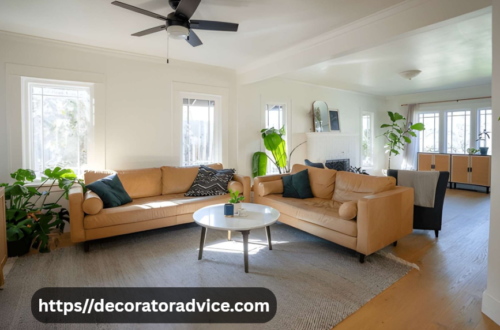
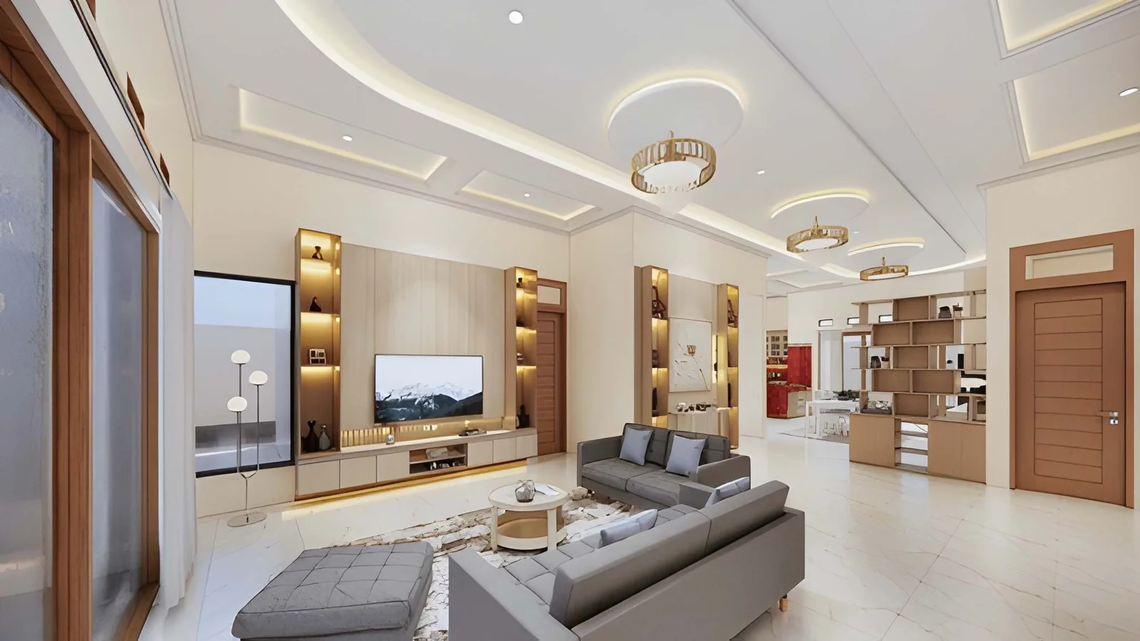
Are You Ready to Create the Ultimate Modern Living Room?
The modern living room is one of the most searched, most saved, and most consistently misunderstood design directions in the US home market. It gets simplified into a formula — white walls, grey sofa, clean lines, minimal objects — and applied without enough understanding of what actually makes modern spaces work versus what makes them feel cold, sparse, and impersonal.
A genuinely well-executed modern living room is one of the most satisfying spaces to be in. It’s visually calm without being sterile. It’s minimal without being empty. It’s contemporary without being so trend-specific that it’ll look dated in three years. And it functions as well as it photographs — which isn’t always true of the version that lives in design publications.
Getting there requires more than choosing the right sofa color. It requires understanding what modern actually means as a design orientation, which elements make a modern living room feel genuinely designed rather than just stripped of decoration, how to introduce warmth into a space that’s supposed to feel clean, and which decisions carry trend risk versus which ones produce the timeless contemporary result most homeowners are actually after. This article covers all of it.
What “Modern” Actually Means in Living Room Design
The term is used loosely enough in US home design content that it’s worth defining precisely before building anything around it.
“Modern” in the strict design sense refers to mid-century modernism — the design movement from approximately the 1920s through the 1970s characterized by clean lines, natural materials, functional forms, and rejection of ornament. “Contemporary” refers to what’s current now — which borrows from modern principles but isn’t bound to that historical period.
In everyday US usage, “modern living room” typically means: visually clean, minimal ornamentation, considered material palette, neutral or near-neutral color story, and furniture with clear lines rather than traditional carved or ornate profiles. That definition is workable and it’s what this article addresses.
| Design Term | What It Actually Means | Common Misuse |
|---|---|---|
| Modern | Mid-century movement — 1920s–1970s specific | Used to mean any clean, contemporary space |
| Contemporary | Current design — evolves continuously | Often used interchangeably with modern |
| Minimalist | Aesthetic of visual emptiness and reduced objects | Applied to any neutral or simple space |
| Scandinavian | Nordic design tradition — warm minimalism | Confused with cold minimalism |
| Industrial | Raw materials, warehouse aesthetic | Applied to any dark or raw-finish space |
| Clean-lined | Furniture and architecture without ornament | Often the real target when “modern” is said |
The Elements That Make a Modern Living Room Actually Work
The Right Neutral Palette — Warm, Not Cold
The most common modern living room mistake in US homes is choosing a color palette that’s neutral in the wrong direction — cool greys and blue-whites that feel clinical rather than calm. A genuinely comfortable modern living room uses warm neutrals: off-whites with yellow or pink undertones, warm taupes, natural linen tones, warm greys with brown undertones.
The distinction matters because cool neutrals in combination with the flat overhead lighting that most US homes have produces a color experience that feels institutional — like a medical waiting room rather than a designed living space. Warm neutrals in the same conditions feel settled and residential.
| Neutral Category | Specific Examples | Effect on Modern Living Room |
|---|---|---|
| Warm white | Benjamin Moore White Dove, Sherwin Accessible Beige | Warm, residential, works with wood and brass |
| Cool white | Bright white, stark white, blue-based whites | Clinical in low light — works only with excellent natural light |
| Warm grey | Agreeable Grey, Repose Grey | Most versatile — works in most US lighting conditions |
| Cool grey | Gravity, Classic French Grey | Requires abundant natural light to avoid cold read |
| Natural linen | Off-white with yellow/brown undertone | Most consistent across different lighting conditions |
| Greige | Between grey and beige | Highly livable — works with most material palettes |
The Sofa: Proportion and Fabric Over Trends
In a modern living room, the sofa carries more visual weight than in decorated or traditional spaces — because with less surrounding it, its quality reads more clearly. The specific qualities that matter:
Proportion. A modern sofa should be appropriately scaled for the room — two-thirds of the primary wall it faces as a general guideline. Both oversized and undersized sofas undermine the visual order that makes modern spaces work.
Profile. Low to medium seat height, visible legs (which creates visual lightness and makes the piece feel like it floats rather than sits heavily), and arms that are clean rather than rolled or tufted.
Fabric. Performance linen, bouclé, velvet in a muted tone, or quality fabric in warm neutral tones. The fabric should introduce texture — the element that provides visual warmth in a space that doesn’t rely on ornamentation for interest.
Materials: The Warmth Layer That Modern Spaces Require
The most consistent failure point in US modern living rooms: visual coldness from insufficient material warmth. A space with white walls, grey upholstery, and glass or metal accents can look correct and feel uncomfortable — because it hasn’t introduced the organic, warm-toned materials that make modern spaces inviting rather than merely clean.
The material combination that consistently works:
| Material | Role in Modern Living Room | How to Introduce It |
|---|---|---|
| Natural wood (oak, walnut) | Warmth, grain, organic variation | Floors, coffee table, shelving, accent furniture |
| Linen or textured fabric | Tactile warmth, visual softness | Sofa upholstery, curtains, cushions |
| Natural stone or concrete | Weight, permanence, texture | Coffee table top, fireplace surround, decorative object |
| Warm-toned metal (brass, bronze) | Contrast, punctuation, warmth | Lighting fixtures, hardware, accent objects |
| Plants | Organic life, color contrast, scale | Floor plants in corners, smaller plants on surfaces |
| Wool or natural fiber rug | Acoustic softness, zone definition, tactile warmth | Under primary seating group |
Lighting: The Element That Makes or Breaks a Modern Living Room
A modern living room with flat overhead lighting is a space that’s been designed for photographs rather than for living. The clean lines and minimal palette of a modern space require layered warm lighting to produce the atmosphere they’re capable of — without it, the space reads as underfurnished rather than deliberately minimal.
The specific lighting approach that works in a modern living room: a statement overhead fixture with visual presence (not an invisible recessed setup), floor lamps at the darkest corners producing warm light pools, table lamps where applicable, and dimmers on all overhead circuits. Bulb temperature throughout: 2700K maximum.
The Modern Living Room Layout Principles That Most People Get Wrong
Float the Furniture
The most common layout mistake in US modern living rooms: furniture against every wall. Modern spaces are defined by furniture that floats — pulled away from walls and oriented toward each other and a focal point, creating a room within a room effect that makes the space feel larger and more deliberately composed.
Create One Clear Focal Point
A modern living room works best with one clear focal point that everything else responds to. A fireplace, a wall-mounted TV flush with the wall (not on a stand), a significant piece of artwork, or an architectural feature. Multiple competing focal points undermine the visual order that makes modern spaces feel resolved.
The Rug Does Heavy Lifting
In a space with minimal ornamentation, the rug is often doing more visual work than any other single element. It defines the zone, grounds the furniture group, introduces color and texture, and adds acoustic softness to what is often a hard-surface-dominant environment. Size is non-negotiable: the rug must be large enough for all primary seating pieces to have at least their front legs on it.
| Modern Living Room Layout Element | Correct Approach | Common Mistake |
|---|---|---|
| Sofa position | Floated 12–18″ from wall | Pushed against wall |
| Focal point | One clear element the room responds to | TV + fireplace + art all competing |
| Rug size | All front furniture legs on rug | Undersized rug floating beneath coffee table only |
| Coffee table clearance | 14–18″ from sofa | Too close (cramped) or too far (disconnected) |
| Secondary seating | Angled toward conversation zone | Parallel to sofa, theater-style |
| Plant placement | Large floor plant in weakest corner | Scattered small plants without scale impact |
Frequently Asked Questions
What defines a modern living room versus other styles?
Visually clean lines, minimal ornamentation, a considered material palette, and furniture that prioritizes form and proportion over decorative detail. Modern living rooms work through composition and material quality rather than through decorative accumulation — which is why each individual element needs to be chosen more carefully than in spaces where decoration provides visual interest.
How do I make a modern living room feel warm rather than cold?
Through material selection rather than color alone. Warm neutrals on walls, natural wood surfaces, textured fabrics on upholstery and rugs, warm-toned metal accents, plants, and warm bulb temperature (2700K) lighting together create a modern living room that feels residential and inviting rather than clinical. Any modern space that feels cold has one or more of these elements missing.
What sofa style works best in a modern living room?
Low to medium profile with visible legs, clean arms (not rolled or tufted), and a fabric with texture — linen, bouclé, or velvet in a muted warm tone. The legs are particularly important: they create visual lightness that makes the sofa appear to float rather than sit heavily on the floor, which is central to the modern aesthetic’s approach to furniture scale.
How do I add personality to a modern living room without making it look cluttered?
Through specificity rather than volume. One significant piece of artwork with personal meaning, one collected object on a shelf that carries history, one plant that’s been chosen deliberately — these add the human element that makes a modern living room feel inhabited rather than staged. The principle is that each object earns its place through what it contributes, not through visual abundance.
What’s the most impactful single change for making a living room look more modern?
Removing what doesn’t belong before adding anything. Most US living rooms have accumulated objects, furniture, and decoration over years of use. Editing — removing pieces that don’t contribute to a clean, considered composition — produces more immediate progress toward a modern living room than any purchase. Start by taking out anything that reads as decorative filler and assess what remains before deciding what to add.
The Bottom Line
A modern living room that actually works — that feels calm, warm, and genuinely designed rather than simply stripped and cold — is built from warm material choices, proportional furniture, layered warm lighting, a single clear focal point, and furniture that floats rather than hugs the walls.
The formula that’s most often applied (white walls, grey sofa, minimal objects, recessed lighting) produces the cold version that US homeowners frequently discover they don’t enjoy living in. The version worth building adds warm neutrals, natural wood, textured fabric, warm lighting at human scale, and the one or two personal objects that make the space specific to the people who live in it.
Modern and livable aren’t opposites. They require each other.
For modern living room ideas must visit https://decoratoradvice.fr/

Jessica X
Writer at DecoratorAdvice com, sharing practical home design insights, décor trends, and expert tips to help readers create beautiful, functional living spaces.


You May Also Like

What Are the Most Shared Home Exterior Hacks Going Viral Right Now?
Could One Upgrade Make Your Bathroom Feel Completely Luxurious?